русский
 中文简体
中文简体 Español
 Deutsch
 عربى
عربىContent
- 1 Understanding LAN Cable Categories Before Configuring Your Line
- 2 Stage 1: Copper Wire Drawing and Annealing
- 3 Stage 2: Insulation Extrusion
- 4 Stage 3: Pair Twisting
- 5 Stage 4: Outer Jacket Extrusion
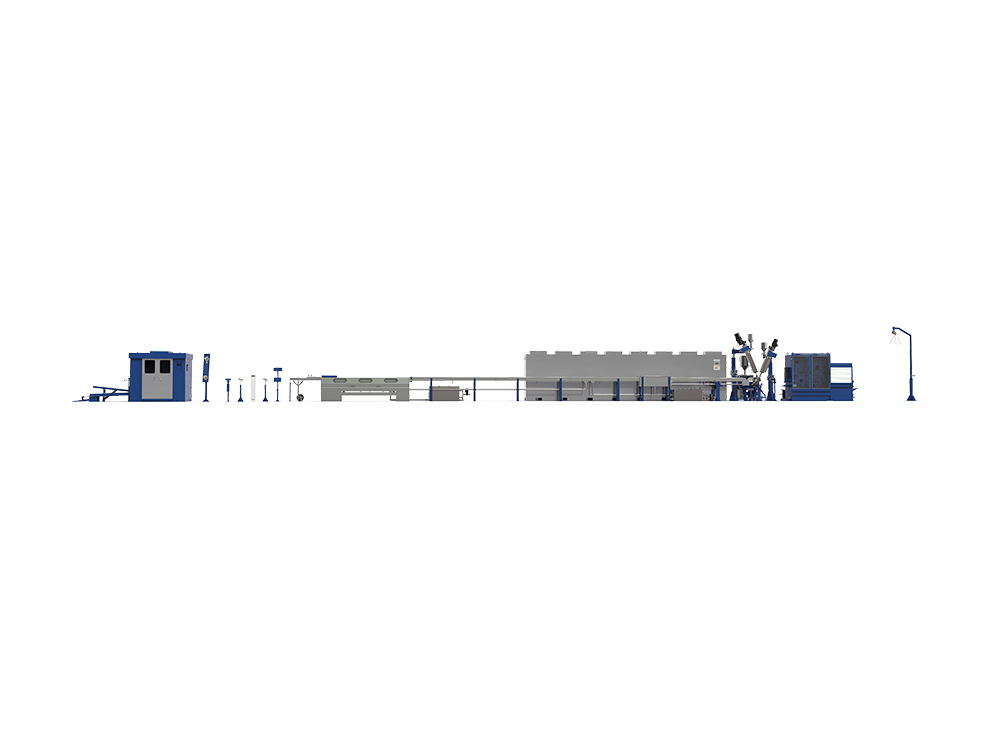
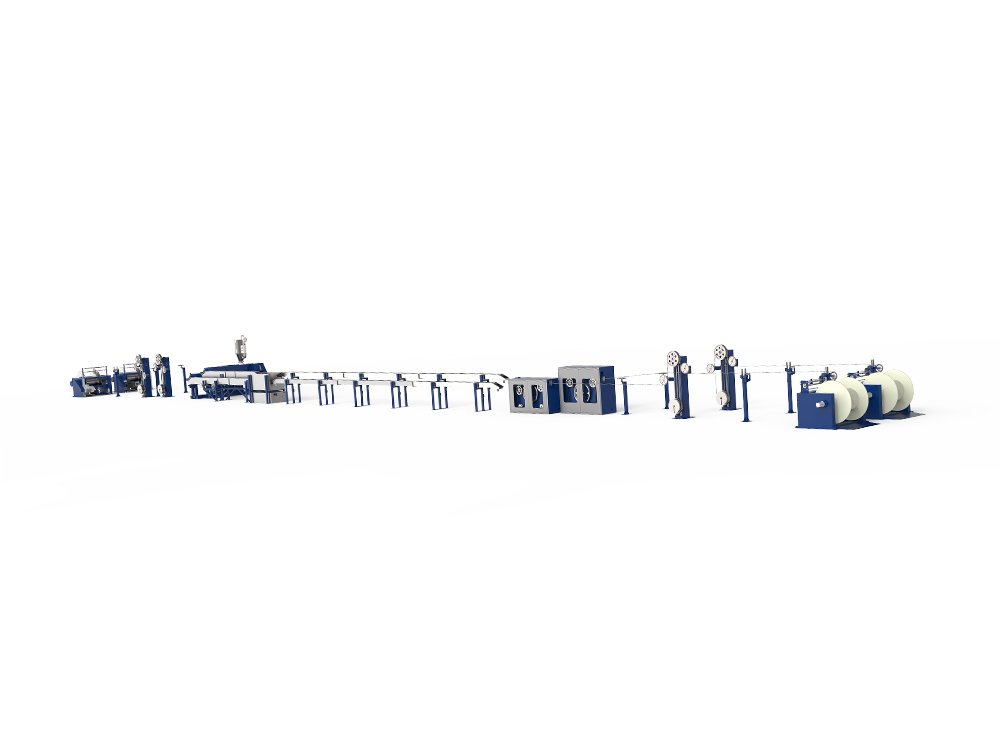
- 6 Complete Equipment List for a LAN Cable Production Line
- 7 Factory Layout and Infrastructure Requirements
- 8 Quality Control and Testing at Each Production Stage
- 9 Process Differences Between UTP and STP LAN Cable Lines
- 10 Compliance, Certification, and Market Entry Considerations
Setting up a LAN cable production line requires four core stages: copper wire drawing and annealing, insulation extrusion, pair twisting, and jacketing. Each stage depends on purpose-built machinery, correct process parameters, and compliance with international cabling standards such as ANSI/TIA-568. Whether you are targeting Cat5e, Cat6, or Cat6A output, establishing the right equipment sequence, understanding material requirements for each cable category, and building in quality testing at every stage will determine both production efficiency and finished cable performance.
Understanding LAN Cable Categories Before Configuring Your Line
The first decision before specifying any machinery is which cable categories your production line will manufacture. Each category carries different construction requirements — particularly around insulation material, conductor diameter, and twist rate — that directly determine which machines and process settings you need.
| Category | Max Speed | Bandwidth | Conductor Diameter | Insulation Type | Standard |
|---|---|---|---|---|---|
| Cat5e | 1 Gbps | 100 MHz | 0.50 mm | Solid HDPE | ANSI/TIA-568 |
| Cat6 | 1 Gbps / 10 Gbps at ≤55 m | 250 MHz | 0.565 mm | Chemical Foam HDPE | ANSI/TIA-568 |
| Cat6A | 10 Gbps at 100 m | 500 MHz | 0.575 mm | Foam or thicker HDPE | ANSI/TIA-568 |
Cat5e is the simplest to produce: it uses solid HDPE insulation with no foaming, and extrusion lines can operate at speeds up to 1,000 m/min. Cat6 requires chemical foaming of the insulation to reduce capacitance, dropping line speeds to approximately 600–800 m/min. Cat6A demands even lower capacitance and tighter alien crosstalk control, often requiring a thicker insulation layer, a central cross-filler inside the cable core, and additional shielding on S/FTP variants. Defining your target product mix before purchasing machinery prevents costly retrofits later.
Stage 1: Copper Wire Drawing and Annealing
The production process begins with reducing copper rod stock to the precise conductor diameter required by the target cable category. A copper rod — typically 8 mm in diameter — is pulled through a series of progressively smaller carbide dies in a wire drawing machine, which reduces the cross-section while increasing the wire's length. Multiple drawing passes are needed to reach final diameters in the 0.50–0.575 mm range used for LAN cables.
Key Equipment for This Stage
- Rod breakdown machine (RBD machine) — reduces large copper rod to an intermediate diameter suitable for subsequent fine drawing.
- Medium and fine wire drawing machines — multiple-die machines that progressively reduce conductor diameter to the target specification.
- Inline annealing unit — drawn wire becomes work-hardened and brittle; annealing restores ductility and electrical conductivity by passing the wire through a controlled heating and cooling zone. Tandem lines that combine drawing, annealing, and insulation extrusion in one continuous pass reduce handling, increase speed, and lower production costs.
At this stage, diameter consistency is critical. Variations in conductor diameter directly affect the electrical impedance of the finished cable, which must meet the 100Ω (UTP, Americas standard) or 150Ω (STP, European standard) nominal values specified for LAN cables.
Stage 2: Insulation Extrusion
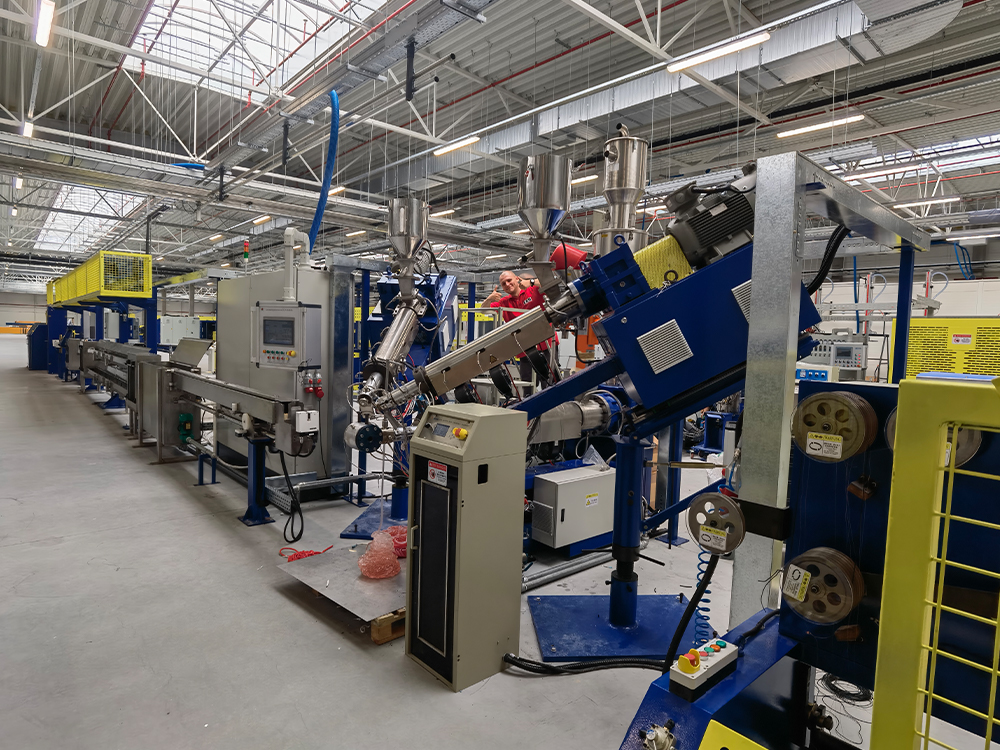
After drawing and annealing, each conductor is coated with an insulating layer. The extrusion line preheats the copper wire using an induction preheater to improve adhesion between the conductor and insulation material, then feeds it through a crosshead die where the insulation compound is applied under controlled temperature and pressure.
Insulation Material Selection by Category
- Cat5e — solid high-density polyethylene (HDPE). No foaming required. This is the simplest extrusion process and supports the highest line speeds.
- Cat6 — chemically foamed HDPE. Introducing gas cells into the insulation lowers the dielectric constant, which reduces capacitance and supports the 250 MHz bandwidth requirement.
- Cat6A — foamed HDPE with greater wall thickness, or physically foamed HDPE. The lower capacitance needed to pass 500 MHz alien crosstalk tests demands either higher foam expansion ratios or thicker insulation walls.
Extrusion Process Controls
Three parameters govern insulation quality and must be actively monitored throughout the run:
- Eccentricity — the deviation of insulation thickness around the conductor circumference. An off-center insulation layer creates impedance variations along the cable length.
- Surface smoothness — rough or irregular insulation surfaces indicate inconsistent melt temperature or die contamination and will cause problems in subsequent twisting.
- Density and void-free cross-section — the insulation layer must be free of pinholes and air pockets, which act as failure points under voltage and reduce long-term cable reliability. A spark tester runs inline to detect pinholes in real time.
After extrusion, the insulated wire passes through a water trough — typically 1.5 m and 8 m sections — for rapid cooling before the take-up spool. Cooling speed affects insulation crystallinity and mechanical properties, so water temperature is regulated carefully.
Stage 3: Pair Twisting
LAN cables derive their noise rejection from the balanced twisted-pair structure. Two insulated wires are twisted together to form a unit pair, and each pair must have a distinct twist rate (lay length) to minimize crosstalk between pairs within the same cable bundle. This is not a cosmetic feature — the specific twist rates per pair are a fundamental electrical design parameter that determines how well the cable rejects both near-end and far-end crosstalk at high frequencies.
Pair Twisting Equipment
- High-speed pair-twist machine with back-twist capability — twists two insulated wires into a balanced pair at high speed while applying a controlled back-twist to relieve torsional stress. For Cat5e production at high volumes, triple-twist or high-speed double-twist machines maximize throughput.
- Cantilever-type single-twist cabling machine — assembles the four twisted pairs (plus a rip cord for UTP, or a central cross-filler and rip cord for Cat6/Cat6A) into a unified cable core. Each pair is stranded at a different lay length per the cable design specification.
LAN cables are produced in two principal variants. UTP (Unshielded Twisted Pair) cables, predominantly used in the Americas to a 100Ω impedance standard, rely entirely on the twist structure for noise rejection. STP (Shielded Twisted Pair) cables, common in European 150Ω applications, add foil or braid shielding around individual pairs or the entire bundle during or after cabling.
For Cat6A UTP, a plastic cross-filler (spline) is inserted at the center of the four-pair assembly to physically separate the pairs, reduce pair-to-pair capacitive coupling, and control alien crosstalk — the dominant performance challenge at 500 MHz. For S/FTP Cat6A, each pair is individually foil-wrapped before cabling.
Stage 4: Outer Jacket Extrusion
The cabled core passes through a sheathing extrusion line, which applies the outer jacket. The jacket serves as both mechanical protection and a carrier for printed identification (cable category, length markers, and compliance certifications). Jacket material selection depends on the deployment environment:
- PVC (polyvinyl chloride) — the standard choice for indoor installations. Cost-effective, flexible, and easy to process.
- LSZH (Low Smoke Zero Halogen) — required in enclosed spaces such as data centers and transportation infrastructure where toxic smoke from burning cables poses a safety hazard.
- PE (polyethylene) or UV-stabilized PE — used for outdoor or direct-burial cables. PE resists moisture ingress and UV degradation more effectively than PVC.
- Plenum-rated compounds — cables installed in HVAC air-circulation spaces must meet fire-resistance and low-smoke requirements defined in relevant building codes.
For UTP cables, a rip cord is co-extruded under the jacket to facilitate clean jacket removal during field termination. For STP cables, a plastic-cast aluminum tape may be added beneath the jacket before sheathing, providing a longitudinal foil layer for additional EMI shielding.
Complete Equipment List for a LAN Cable Production Line
The following table summarizes the core and auxiliary machines needed for a complete LAN cable production line, organized by production stage:
| Production Stage | Equipment | Function |
|---|---|---|
| Wire Drawing | Rod breakdown machine (RBD), fine wire drawing machine | Reduce copper rod to target conductor diameter |
| Annealing | Inline annealing unit (often integrated in tandem line) | Restore conductor ductility and conductivity |
| Insulation Extrusion | PLC-controlled insulation extrusion line, induction preheater, water trough, spark tester, take-up | Apply solid or foamed HDPE insulation; detect pinholes |
| Pair Twisting | High-speed pair-twist and back-twist machine | Twist two insulated wires into a balanced pair at the specified lay length |
| Cable Assembly | Cantilever single-twist cabling machine, foiling unit (STP) | Assemble four pairs into cable core; add cross-filler or foil as required |
| Jacket Extrusion | PLC-controlled sheathing extrusion line, printing unit | Apply outer jacket; print identification markings |
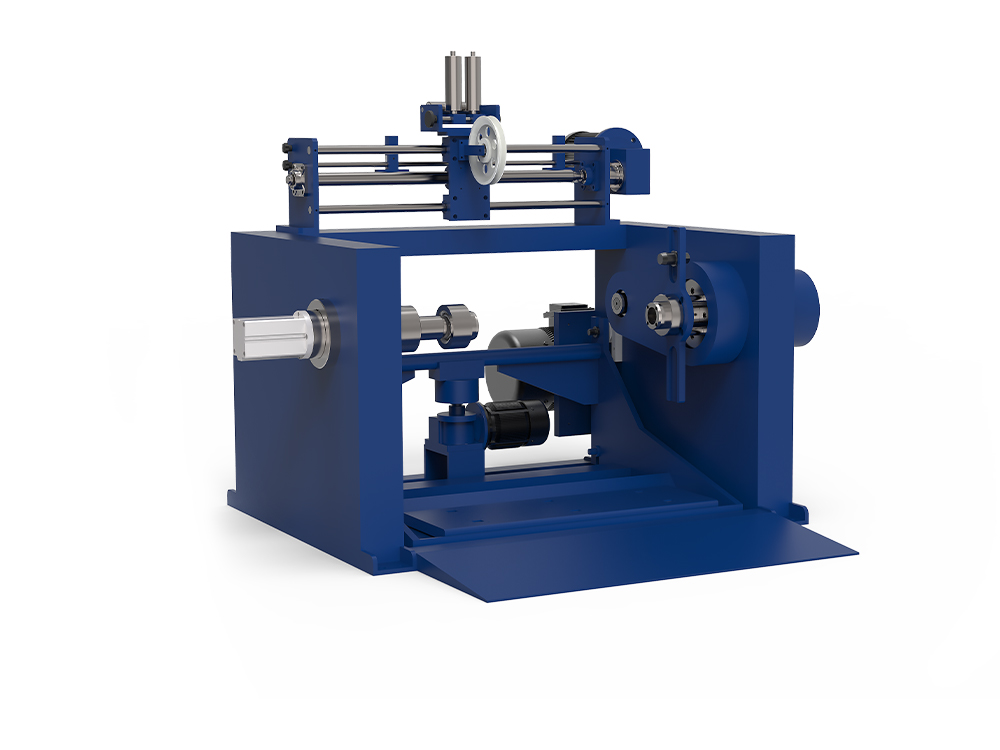
| Coiling and Packaging | Automatic coiling machine, spooling machine, or integrated coil-and-spool unit | Wind finished cable onto spools or coils for shipment |
| Quality Testing | Spark tester, continuity tester, impedance tester, high-frequency network analyzer | Verify electrical performance against TIA/EIA or ISO/IEC standards |
A LAN cable production line configured as a tandem system — combining drawing, annealing, and insulation extrusion into a single continuous pass — reduces material handling, eliminates intermediate spool changes, and significantly increases output speed compared to a conventional five-step separated process.
Factory Layout and Infrastructure Requirements
Physical plant design has a direct impact on production flow and safety. A well-planned layout minimizes material travel between stages, reduces handling damage to semi-finished goods, and supports efficient workforce deployment.
Floor Space Allocation
Extrusion lines are long, linear machines — a complete insulation extrusion line including preheater, extruder, water trough, and take-up typically extends 15–25 meters. The cabling and sheathing lines require similar floor lengths. Adequate aisle space on both sides of each line is essential for maintenance access, bobbin changeover, and material logistics.
Utilities and Environmental Controls
- Three-phase electrical supply — extrusion machines and wire drawing lines draw significant power; verify that the facility's electrical infrastructure supports the combined motor load of all lines running simultaneously.
- Cooling water system — both the insulation extrusion and jacketing lines require circulating water for the cooling troughs. A closed-loop chiller system with temperature regulation maintains consistent cooling rates across production runs.
- Ventilation — extrusion of PVC and other polymers releases fumes that require adequate forced ventilation and, in some regions, fume extraction systems to meet occupational health regulations.
- Compressed air supply — several machines, including bobbin-handling equipment and some PLC control panels, require a stable compressed air supply.
Raw Material Storage
Copper rod, insulation compounds, and jacketing materials must be stored in climate-controlled conditions away from moisture and direct sunlight. Polymer granules for extrusion must be kept dry — moisture in the feedstock causes bubble formation in the extruded layer, which creates voids that compromise both electrical performance and mechanical strength.
Quality Control and Testing at Each Production Stage
Quality cannot be inspected into a finished LAN cable — it must be controlled throughout the production process. Testing at each stage catches problems early, before defective material is processed further and waste costs accumulate.
In-Process Testing Points
- After wire drawing — measure conductor diameter with a laser micrometer. Diameter must meet the target specification for the cable category (e.g., 0.50 mm ±0.005 mm for Cat5e).
- On the insulation extrusion line — inline spark tester detects pinholes in the insulation as the wire exits the die. A laser diameter gauge monitors insulation outer diameter continuously for eccentricity.
- After pair twisting — verify twist lay lengths against the cable design specification. Measure capacitance per unit length between the two conductors of each pair; deviations indicate problems in insulation thickness or foaming consistency.
- After cabling — check overall cable diameter and roundness. Inspect cross-filler seating on Cat6/Cat6A designs.
- On the finished reel — full electrical sweep testing using a network analyzer to verify attenuation, NEXT, FEXT, return loss, and propagation delay against ANSI/TIA-568 minimum thresholds for the applicable cable category.
High-frequency spark testing at up to the required dielectric withstand voltage is performed as standard on the insulated single wires. For finished reels, a cable that fails to meet TIA minimum thresholds cannot be shipped as a compliant product regardless of its physical appearance — electrical sweep testing is non-negotiable for any production line targeting certified output.
Process Differences Between UTP and STP LAN Cable Lines
The fundamental production stages are the same for both UTP and STP cables, but STP variants require additional equipment and process steps between cable assembly and jacket extrusion.
| Feature | UTP (100Ω) | STP / S-FTP (150Ω) |
|---|---|---|
| Market region | Americas (primary) | Europe (primary) |
| Shielding equipment | None | Foiling unit per pair and/or overall braid applicator |
| Rip cord | Required under outer jacket | Optional; may include plastic-cast aluminum tape |
| Cat6A core construction | Central cross-filler between pairs | Individual pair foil wraps + overall shield |
| Grounding | Not required | Drain wire required for shield grounding |
Compliance, Certification, and Market Entry Considerations
Finished LAN cables intended for commercial sale must comply with applicable standards. The two primary frameworks are:
- ANSI/TIA-568 — the dominant standard in North America, defining minimum electrical performance requirements for Cat5e, Cat6, and Cat6A cables used in structured cabling systems.
- ISO/IEC 11801 and CENELEC EN 50173 — the international and European equivalents, covering both 100Ω UTP and 150Ω STP cable variants and widely referenced in project specifications outside North America.
Third-party certification testing by an accredited laboratory is typically required before a new cable product can carry a category designation in marketing materials or be accepted by major contractors. Building third-party test submissions into the production line commissioning schedule — rather than treating certification as an afterthought — avoids delays between production ramp-up and market entry.
Local zoning, environmental compliance, and safety regulations for the manufacturing facility must also be secured before commencing production. Environmental regulations in many markets govern the disposal of copper drawing lubricants, polymer scrap, and cooling water, requiring documented waste management procedures as part of the operating license.