

Quick Answer: The Core Difference Between Single Mode and Multimode Fiber The main difference comes down to core size and how light travels through it. Single mode fiber uses a core roughly 9 microns wide, sending a single, tightly focused laser beam straight down the fiber, wh...
READ MOREDirect Answer: The Three Core Types of Networking Cables There are three primary types of cables in networking: twisted pair cable, coaxial cable, and fiber optic cable. Twisted pair cable (Cat5e through Cat8) dominates local area network installations because it balances cost, ...
READ MOREQuick Answer: What Is Insertion Loss? Insertion loss is the reduction in signal strength that occurs as a signal passes through a cable, connector, or other component in a transmission path, measured in decibels (dB). In LAN cable terms, it describes how much weaker the signal i...
READ MORE
The Drawing-Insulation Tandem Line is an integrated system specifically designed for LAN cable production. It combines multiple key processes—such as wire drawing, annealing, preheating, extrusion, an...
See Details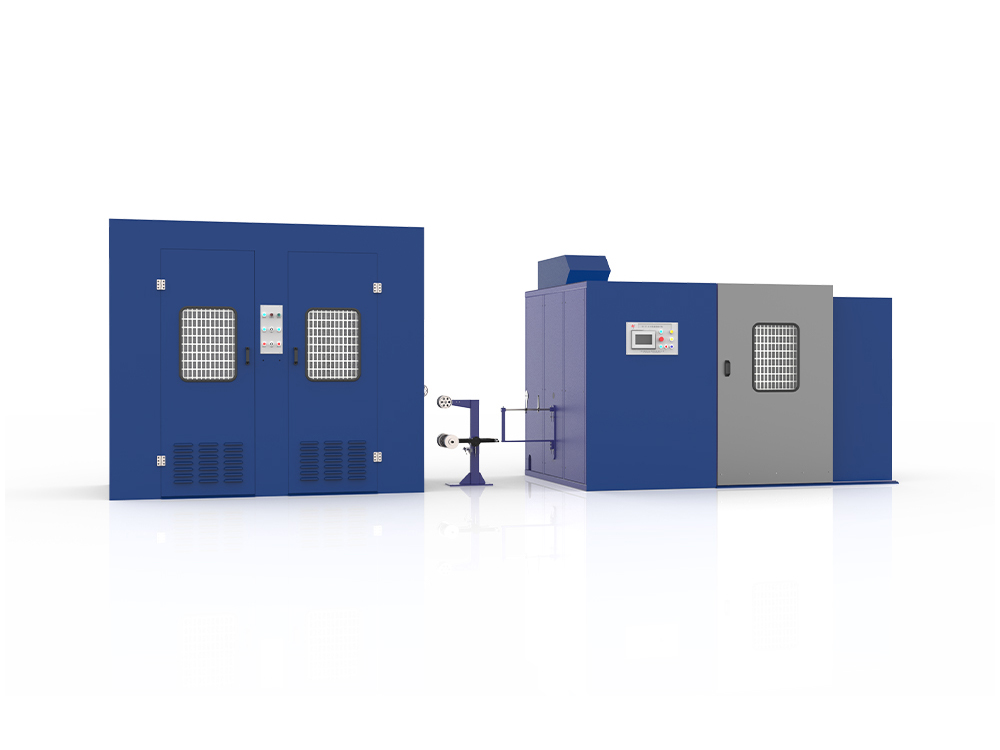
The Pair Twisting Machine with Backtwist is a key piece of equipment specially designed for LAN cable production. It is primarily used to twist two insulated core wires according to specific requireme...
See Details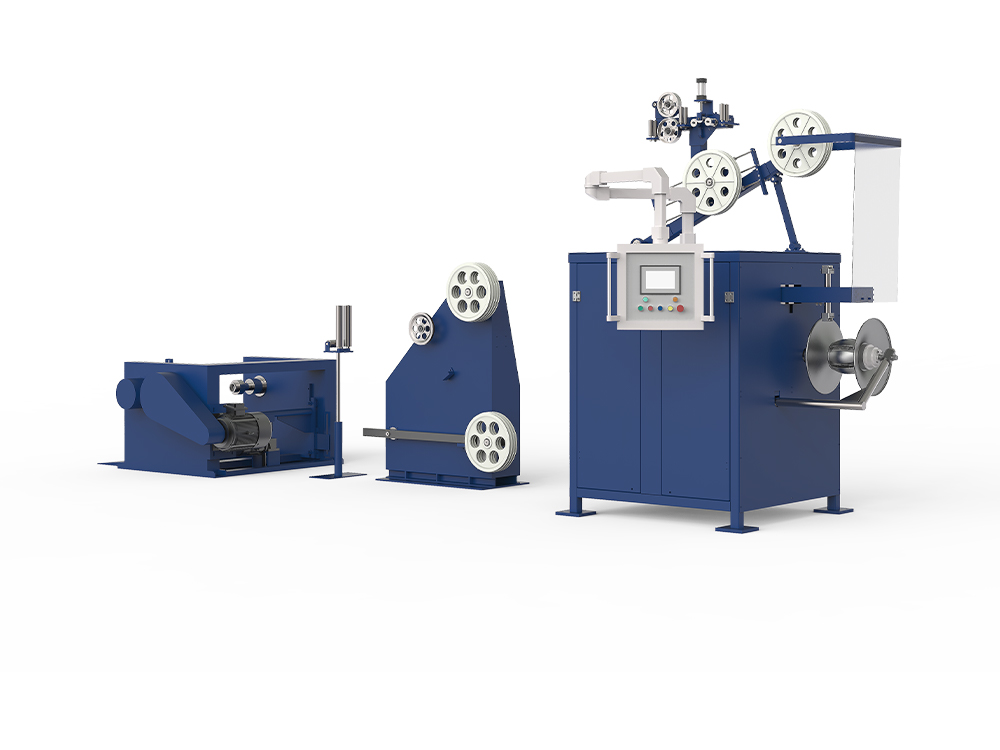
The Mesh Winding Machine is a key piece of equipment for ensuring efficient and high-quality cable coiling. Its performance directly affects the packaging quality, storage, and transportation convenie...
See Details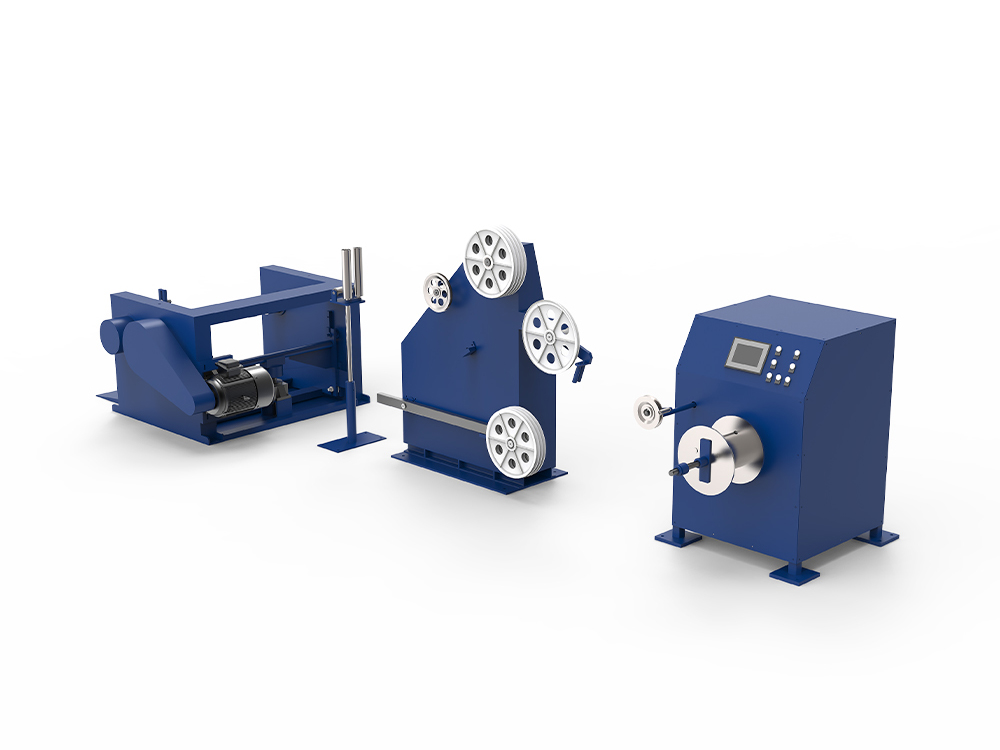
The Rewinding Machine is suitable for the rewinding of various types of cables, including power cables, communication cables, and control cables. It can handle different cable specifications and mater...
See Details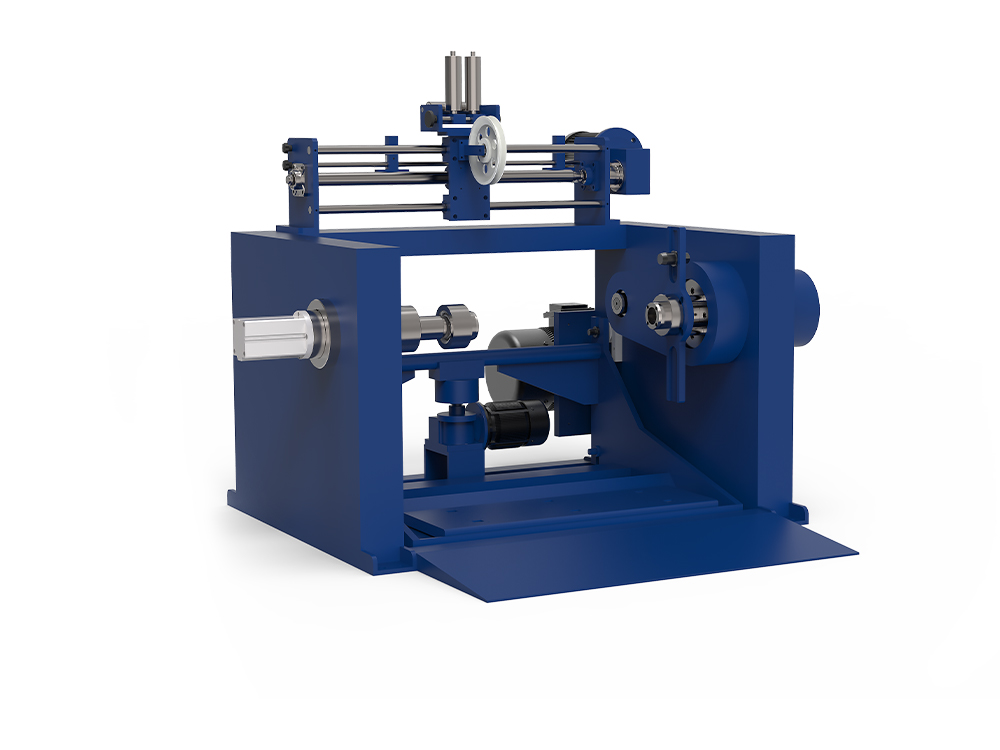
The machine adopts an AC motor closed-loop control system, supporting 10-500N dynamic tension adjustment, suitable for φ500-φ1250mm bobbin specifications, compatible with copper, aluminum, and composi...
See Details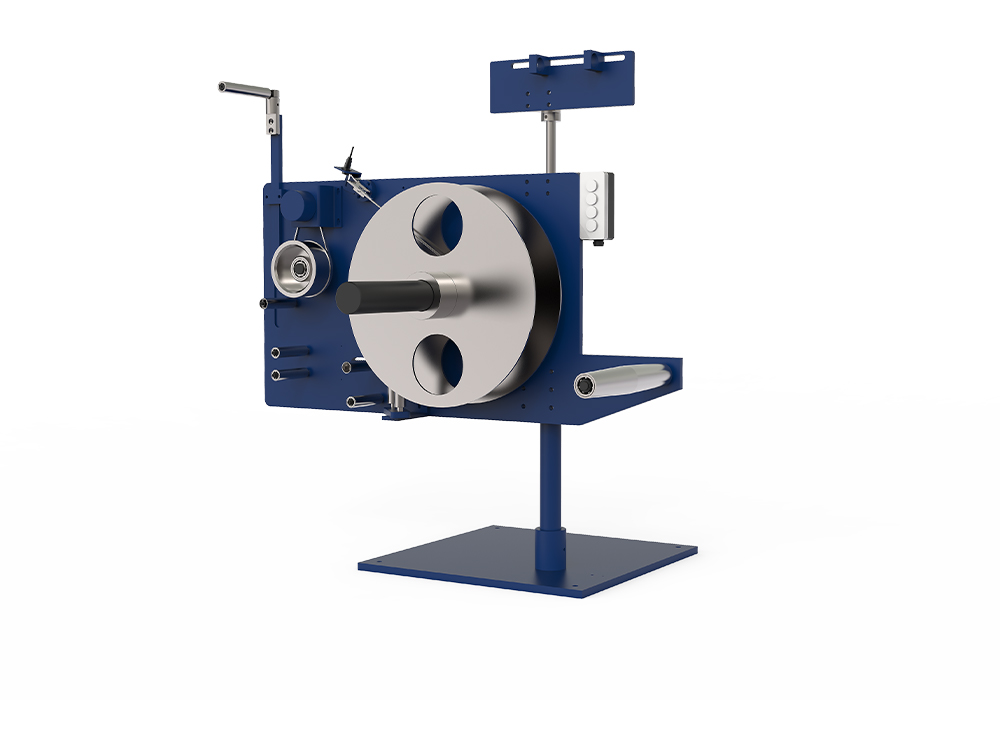
The Tape Pay-off Machine is driven by an AC motor and equipped with a constant-tension control system, offering stepless tension adjustment within the range of 5–50 N. It supports tape rolls with widt...
See DetailsWhat are the control system options for a Cable Drawing Annealing Machine?
Control System Options for Cable Drawing Annealing Machines
1. PLC (Programmable Logic Controller)
Using an industrial-grade PLC to achieve synchronous control of core subsystems such as drawing, annealing, motors, and hydraulic circuits, featuring high-speed response and reliable fieldbus communication.
2. Touch Screen/HMI (Human Machine Interface)
A graphical interface displays key parameters such as drawing tension, annealing temperature, and wire diameter in real time, allowing operators to quickly adjust process parameters and improve production efficiency.
3. Remote Monitoring and SCADA System
Supports uploading field data to a higher-level system, enabling centralized monitoring, fault warning, and production report analysis across plants and regions, facilitating unified management of large-scale production lines.
4. Customized Control Software
Providing customized motion control algorithms and parameter libraries based on the customer's specific process requirements (such as multi-stage annealing and variable diameter drawing), ensuring high precision across different specifications (0.203mm–0.60mm).
| Control System | Main Functions | Typical Application Scenarios | Key Advantages |
| PLC (Programmable Logic Controller) | Real‑time sensor acquisition, logical processing, motor and hydraulic valve actuation | Basic closed‑loop control of drawing‑annealing‑take‑up | Stable, fast response, easy on‑site maintenance |
| HMI (Human‑Machine Interface) | Graphical display of process parameters, alarms, operator input | On‑site monitoring, quick process switching | Intuitive, touch‑enabled, can be linked to remote monitoring |
| SCADA (Supervisory Control & Data Acquisition) | Centralized monitoring across sites, historical data storage, trend analysis, remote diagnostics | Multi‑machine or line networking, smart‑factory platforms | Wide‑area data aggregation, cloud‑ready analytics, improves overall visibility |
| Integrated Industrial Control Platform (PLC + HMI + SCADA) | Combines local control, on‑site interaction, and upper‑level monitoring in one system | Highly automated, flexible lines, customized processes | Balances real‑time locality with enterprise‑level data governance; easy to upgrade later |
What are the matching methods for wire drawing annealing machines and wire winding/recruiting devices?
Matching Methods for Wire Drawing Annealing Machines and Wire Winding/Recruiting Devices
1. Coaxial Linear Matching
The annealing device is directly installed behind the last drawing wheel of the wire drawing machine, forming a continuous production chain of "draw-anneal-recruit," suitable for fine wires of precious metals such as copper and silver.
2. Bidirectional Recruiting Mechanism
The equipment is equipped with two sets of recruiting mechanisms: the right side is used for recruiting when annealing is not in use, and the left side is switched when annealing is activated, achieving rapid switching of production modes.
3. Vertical/Inclined Annealing Machine Combination
A vertical continuous annealing machine (such as DL450-11/WF800) is used in conjunction with an inclined recruiting device to reduce the equipment height, allowing operators to complete wire threading and maintenance without climbing ladders.
| Pairing Method | Structural Characteristics | Suitable Production Scale | Remarks |
| Co‑axial Inline Pairing | Annealing unit placed directly after the drawing wheel; take‑up follows the annealer, forming a continuous “draw‑anneal‑take‑up” line | Small‑to‑medium batch, single‑diameter series | Compact layout, fast wire changeover |
| Dual‑Side Take‑up (Left/Right) | Separate take‑up units on both sides; non‑anneal mode uses the right side, anneal mode switches to the left side | Multi‑spec, mixed‑product production | Enables rapid switching between annealed and non‑annealed processes, enhancing flexibility |
| Vertical/Inclined Combination | Annealer installed vertically or at an incline; take‑up positioned on the same plane or inclined surface | Space‑constrained workshops or high‑throughput lines | Reduces equipment height, easier maintenance and operation |
| Modular Detachable Configuration | Drawing, annealing, and take‑up modules are standardized and can be assembled/disassembled as needed | Custom projects, short‑term trials | Short delivery cycles; low cost for later upgrades or re‑configuration |
How to Choose the Appropriate Annealing Method?
1. Contact Short-Circuit Current Annealing
This method applies current to the wire through a conductive wheel, utilizing the metal's own resistance to generate heat, achieving rapid and uniform annealing. Suitable for highly conductive materials such as copper, silver, and brass; mature technology with relatively low energy consumption.
2. Preheat-Reheat Three-Stage Annealing (CAPL)
Preheating is achieved first with airflow, followed by medium-speed cooling through an air-water mist mixture, and finally rapid cooling for shaping. This process maintains material ductility while improving surface finish and is commonly used for industrial wires with higher mechanical performance requirements.
3. Triangular Airflow Jet Annealing
High-speed airflow is directly sprayed onto the wire surface, creating a localized high-temperature zone followed by rapid cooling. Suitable for fine wire products with strict requirements for annealing uniformity and surface oxidation control.
4. Selection Criteria
Material Properties: For highly conductive materials like copper and silver, contact annealing is preferred; for alloys or materials requiring fine microstructure control, preheat-reheat or triangular annealing can be used.
Wire Diameter Range: Fine diameters (≤0.30mm) are more suitable for airflow jet annealing to avoid overheating; thicker wire diameters can use contact annealing.
Production speed: High-speed wire drawing (>20m/s) requires strong annealing synchronization; current-type or air-jet annealing is recommended. For low-speed production, multi-stage preheating-reheating is an option.
Quality requirements: When extremely high surface finish and microstructure uniformity are required, three-stage preheating-reheating provides a more controllable cooling profile.
| Annealing Method | Working Principle | Suitable Wire Diameter / Material | Key Selection Factors |
| Contact (Resistive) Annealing (electrodes/annealing rollers) | Wire passes over conductive rollers while current flows; electrical resistance generates heat for annealing | 0.30 mm – 0.60 mm copper or silver wire with high conductivity | Works best for thicker wires, provides uniform heating, relatively low cost; current/voltage must be controlled to avoid overheating |
| Pre‑heat → Anneal → Re‑heat (Three‑Stage) | Low‑temperature pre‑heat to prevent oxidation, high‑temperature anneal for recrystallization, followed by a re‑heat to improve uniformity | 0.20 mm – 0.45 mm high‑purity copper or aluminum wire | High uniformity and mechanical performance required; precise temperature control needed |
| Two‑Stage Pre‑heat → Anneal | Only a pre‑heat stage before direct annealing, simplifying the process | Medium diameters (0.30 mm – 0.55 mm) | Suitable for high‑throughput where temperature fluctuations are tolerable; lower equipment cost |
| Triangular Air‑Flow Jet Annealing | High‑velocity gas (or inert gas) jet directly impinges on the wire surface, creating a localized hot zone followed by rapid cooling | Fine wires (≤0.30 mm) and materials sensitive to oxidation | Prevents oxidation on thin wires, fast cooling, higher capital cost; ideal for stringent surface‑finish specifications |
| Induction (Electromagnetic) Annealing | Wire is heated by an alternating magnetic field in a coil, providing non‑contact heating | Special alloys where contact heating must be avoided | Complex equipment, higher energy consumption; used for high‑end specialty wires |
Frequently Asked Questions (FAQ)
Q1:What is the role of a cable drawing and annealing machine in cable production?
A:A cable drawing and annealing machine is used to heat-treat stretched metal wires, eliminating internal stress, improving conductivity and mechanical strength, and ensuring the quality of subsequent stranding and sheath extrusion.
Q2:What are the competitive advantages of Dachen Machinery's products in domestic and international markets?
A:① High cost-performance ratio and fast delivery; ② R&D team comprises more than 20% of the staff and holds multiple patents; ③ ISO9001:2008 quality system certification, and its technology is recognized as industry-leading.
Q3:What is the size of Dachen Machinery's R&D team?
A:The company has more than 60 professional technicians, of whom senior engineers account for more than 20%.


Copyright © Zhangjiagang Dachen Machinery Manufacturing Co., Ltd. All rights reserved. Custom Cable Drawing Annealing Machine Manufacturers

 русский
 中文简体
中文简体 Español
 Deutsch
 عربى
عربى