


 русский
 中文简体
中文简体 Español
 Deutsch
 عربى
عربى
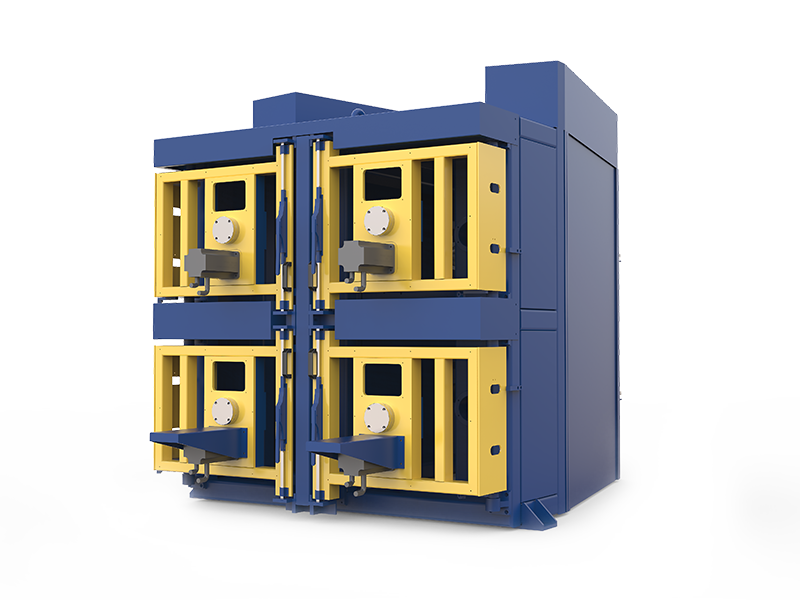
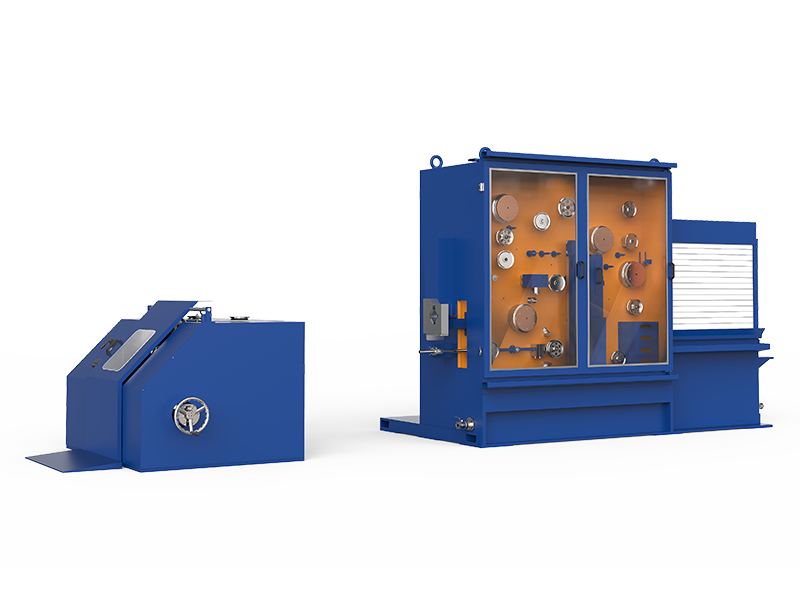
What is Industrial Cable Equipment?
1. Definition and Core Functions: Industrial cable equipment is a fully automated production line used to produce various industrial cables for power, electrical control, automotive, and automation applications. It covers key processes such as insulation extrusion, stranding, sheathing, and fixed-length packaging.
2. Main Application Scenarios:
Power transmission and distribution systems
Industrial control and automation systems
Automotive electrical systems
Special environment (fireproof, waterproof, high-temperature resistant) cables
3. Key Technical Features:
Full-process automation: Integrated control from conductor drawing to finished product packaging improves capacity and consistency.
Multi-material compatibility: Precisely extrudes various insulation materials such as PVC, PE, TPEE, PP, and FEP to meet different insulation performance requirements.
Modular design: Each section has independent functions and can be flexibly combined according to capacity and specifications, facilitating future upgrades and expansion.
4. Advantages of Dachen Machinery:
R&D strength: The company has over 60 professional technicians, with senior engineers accounting for more than 20%, focusing on the R&D of the entire industrial cable line.
Complete industry chain: Self-developed from mechanical structure to electrical control, resulting in short delivery cycles and strong customization services. Quality Assurance: ISO9001:2008 certified, with an annual output value exceeding 500 million RMB, our products enjoy a good reputation in domestic and international markets.
| Key Element | Description |
| Production Process | Full‑process automation: drawing, extrusion, stranding, sheathing, packaging |
| Automation Level | High line speed, robotic handling, online inspection |
| Cable Types Supported | Power, control, communication, automotive, industrial specialty |
| Quality Certifications | ISO 9001, CE, RoHS, etc. |
What are the main differences between local area network (LAN) cables and ordinary household cables?
1. Differences in Transmission Medium and Structure
LAN cables (such as CAT5e, CAT6, CAT6A, CAT7, CAT8) use 8 thin copper wires twisted into 4 or 8 pairs. The outer layer is usually a shielded or unshielded polyethylene/PVC sheath, designed specifically for high-speed data transmission.
Ordinary household cables are mostly single or few-strand twisted pairs, commonly used in low-speed networks or telephone lines. They have fewer shielding layers, limiting transmission distance and bandwidth.
2. Performance Indicator Comparison
| Item | LAN Cable | Ordinary Household Cable |
| Bandwidth | Up to 40 Gbps (Cat 8) | Typically ≤ 100 Mbps (≤ Cat 5e) |
| Transmission Distance | 100 m (Cat 5e/6), 55 m (Cat 7/8) | Generally 30 m–50 m, more susceptible to signal attenuation |
| Shielding Type | Various shielding options such as S/UTP, FTP, S/FTP, providing strong electromagnetic interference (EMI) resistance | Mostly UTP, weaker EMI resistance |
| Applicable Scenarios | Data centers, enterprise campuses, industrial automation networks | Home broadband, ordinary LAN, telephone lines |
3. Key Technical Points
Twisted Pair Count and Wire Diameter: LAN cables achieve impedance matching (usually 100Ω) through strict twisting and wire diameter control, ensuring signal integrity.
Shielding and Sheath Materials: High-specification LAN cables use aluminum foil or braided copper shielding, with an outer layer made of flame-retardant and heat-resistant materials to meet the safety requirements of industrial environments.
Standardization Certification: Compliant with international standards such as IEC and TIA/EIA, providing higher reliability and compatibility.
4. Dachen Machinery's Advantages in LAN Cable Equipment
Fully Automated Process: From conductor drawing to finished product packaging, achieving high-speed production of 1,200m/min, with an annual output of over 100,000 boxes.
Multi-Material Compatibility: Capable of precisely extruding various insulation materials such as PVC, PE, TPEE, PP, and FEP to meet the performance requirements of different CAT series.
Modular Customization: Users can flexibly select equipment according to their requirements for bandwidth, shielding level, wire diameter, etc., achieving "one-stop" LAN cable production line delivery.
How to assess the technical strength of an industrial cable equipment supplier?
| Indicator | Description |
| R&D Team & Certifications | High‑tech enterprise status, senior engineers proportion |
| Automation Level of Equipment | Modular design, full‑process automation |
| Production Capacity & Delivery | Annual output value, lead time |
| Customer Cases & After‑sales | Representative projects, rapid support response |
1. R&D Team and Technological Innovation
A high proportion of senior engineers and R&D personnel directly reflects the depth of technology.
Does the supplier possess independently developed core patents and software/hardware control systems?
2. Production Facilities and Automation Level
Does the production line achieve full-process automation and modular design?
Production workshop area, annual production capacity, and equipment upgrade frequency.
3. Quality Certification and Delivery Capability
Does the supplier possess international quality system certifications such as ISO9001 and CE?
Delivery cycle and after-sales service response time (e.g., 24-hour engineer response).
4. Demonstration of Dacheng Machinery's Technical Strength
R&D Team: The company has over 60 technical personnel, with more than 20% being senior engineers.
Automated Production Lines: Both LAN and industrial cable production lines achieve full-process automated control, with an annual production capacity exceeding 500 million RMB.
Quality and Service: ISO9001:2008 certified, offering a 12-month spare parts warranty and 24-hour engineer response service.
Market Recognition: Products are exported to more than 20 countries and regions, and are highly praised by customers worldwide.
Frequently Asked Questions (FAQ)
Q1:What are the core equipment components of an industrial cable production line?
A:These mainly include wire drawing machines, extruders, cabling machines (cage/reel type), braiding machines, traction devices, and pay-off frames.
Q2:What key equipment is required for a LAN Cable production line?
A:It requires a high-speed extruder, a precision cabling machine, an automatic braiding machine, an optical fiber preform drawing machine, an automatic testing instrument, and a fully automated packaging system.
Q3:What technical parameters should be considered when purchasing a cable cabling machine?
A:Capacity (meters/hour), number of cores, maximum cable diameter, drive power, control system (PLC/touch screen), and whether it supports multi-specification switching.
Q4:What are the common faults and maintenance points of a cable production line?
A:Common faults include extruder blockage, unstable tension in the cabling machine, and synchronization problems in the braiding machine. Maintenance points include regularly cleaning the molds, checking the tension device, calibrating the sensors, and performing proper lubrication and maintenance.


