 русский
 中文简体
中文简体 Español
 Deutsch
 عربى
عربى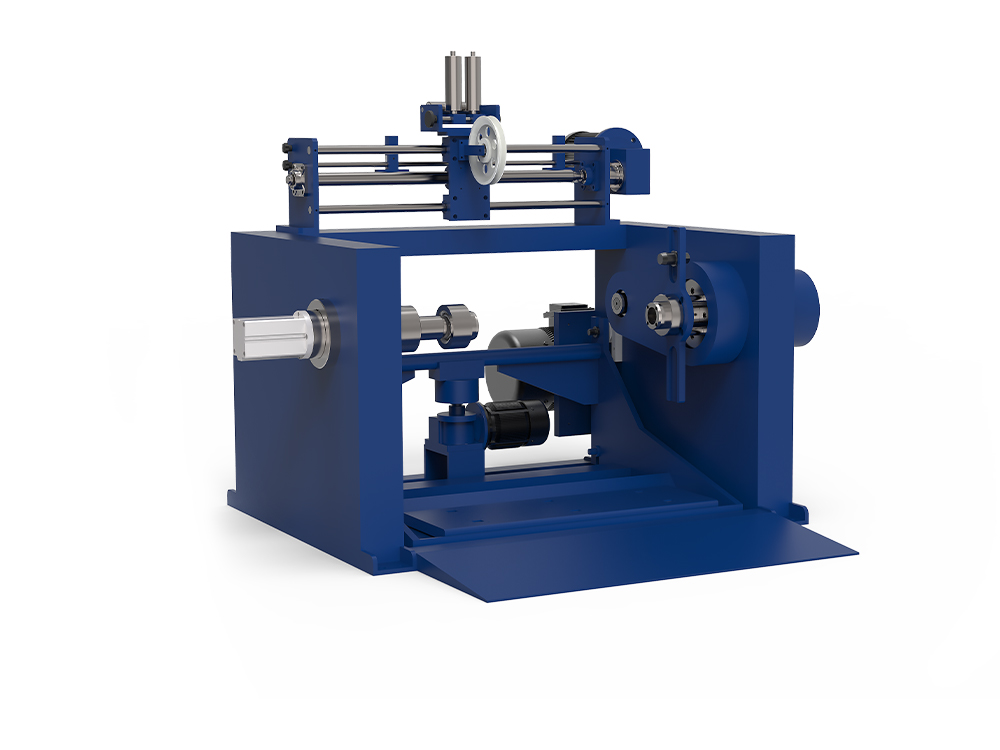
1、Wire speed:100-800m/min
2、Insulation outer diameter: 0.8-5.0mm
3、Temperature control:±1°C
4、Concentricity: >92%



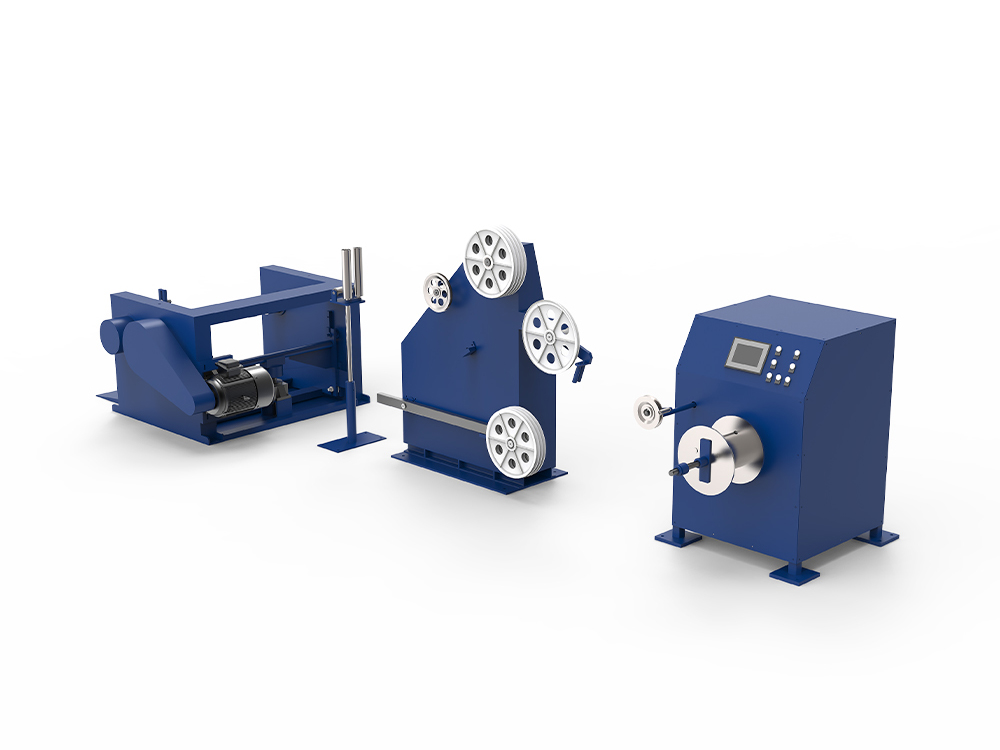
1、Wire speed:100-800m/min
2、Insulation outer diameter: 0.8-5.0mm
3、Temperature control:±1°C
4、Concentricity: >92%


Quick Answer: The Core Difference Between Single Mode and Multimode Fiber The main difference comes down to core size and how light travels through it. Single mode fiber uses a core roughly 9 microns wide, sending a single, tightly focused laser beam straight down the fiber, wh...
READ MOREDirect Answer: The Three Core Types of Networking Cables There are three primary types of cables in networking: twisted pair cable, coaxial cable, and fiber optic cable. Twisted pair cable (Cat5e through Cat8) dominates local area network installations because it balances cost, ...
READ MOREQuick Answer: What Is Insertion Loss? Insertion loss is the reduction in signal strength that occurs as a signal passes through a cable, connector, or other component in a transmission path, measured in decibels (dB). In LAN cable terms, it describes how much weaker the signal i...
READ MORE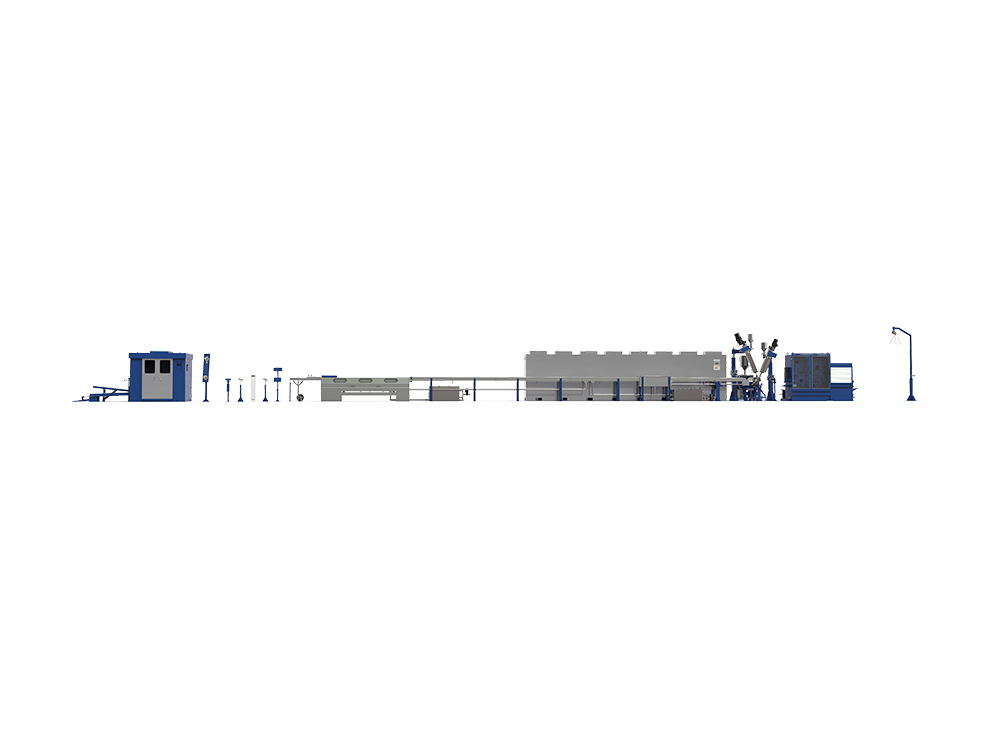
The Physical Foam Insulation Production Line is a high-end manufacturing system tailor-made for LAN cable production. It is suitable for the physical foaming insulation processing of various high-perf...
See Details
The Drawing-Insulation Tandem Line is an integrated system specifically designed for LAN cable production. It combines multiple key processes—such as wire drawing, annealing, preheating, extrusion, an...
See Details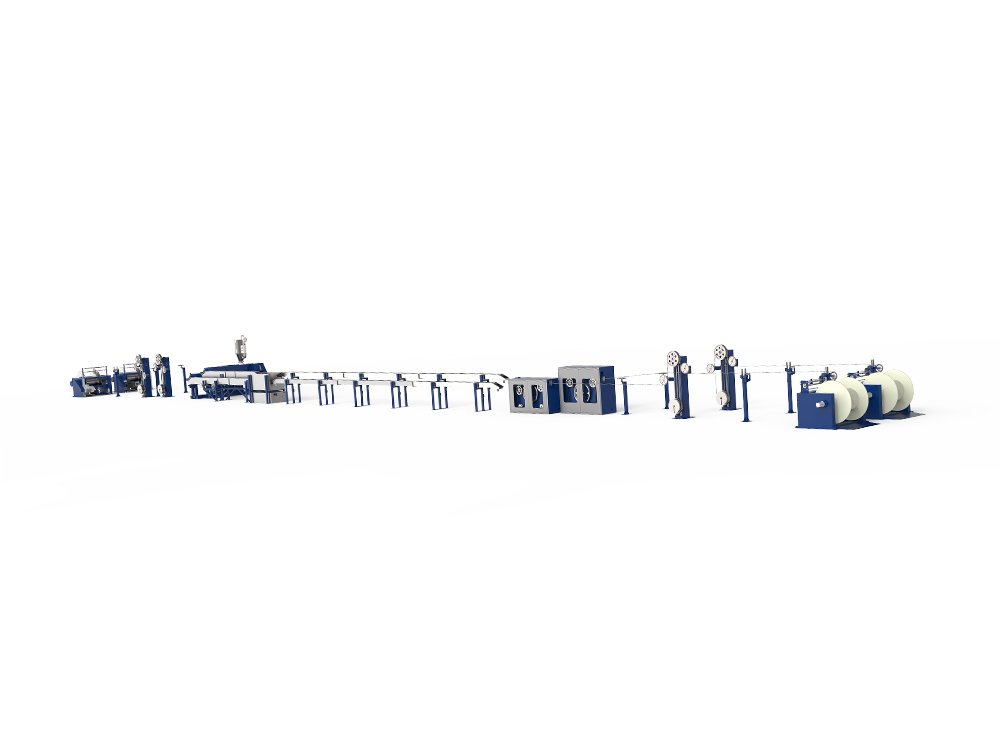
The Cable Jacket Extruder Line is a core piece of equipment for forming the insulation and jacket layers of cables, with its performance directly determining both product quality and production effici...
See Details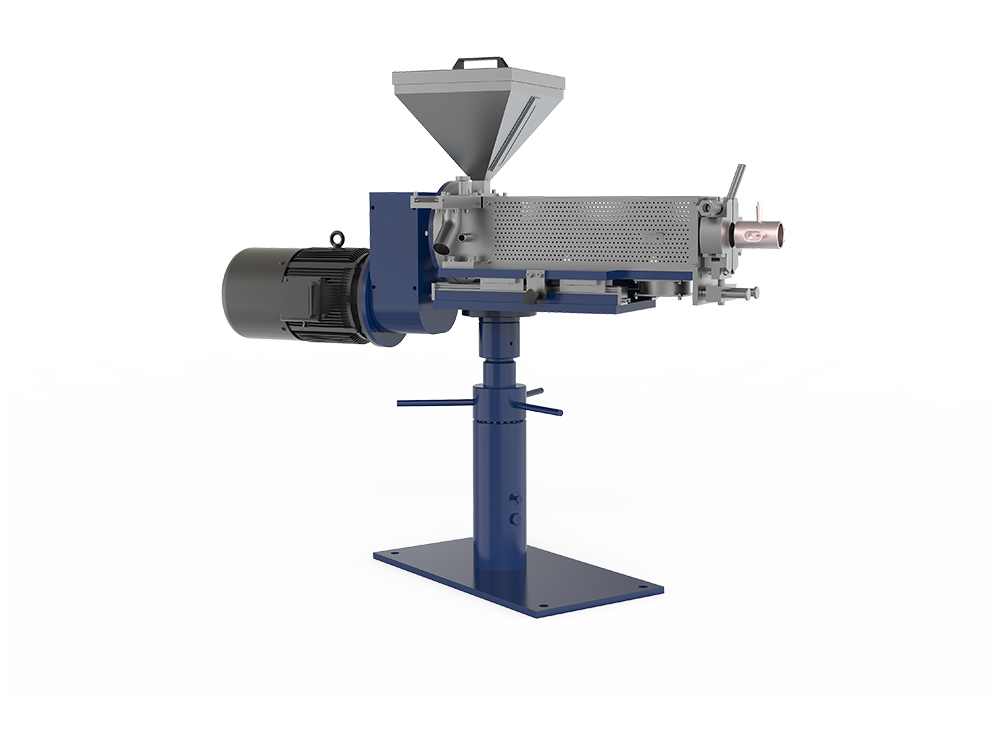
Our strip extruder features a high-torque screw design ranging from Φ25 to Φ60 mm, paired with a PID intelligent temperature control system that maintains plasticizing temperature with a precision of ...
See Details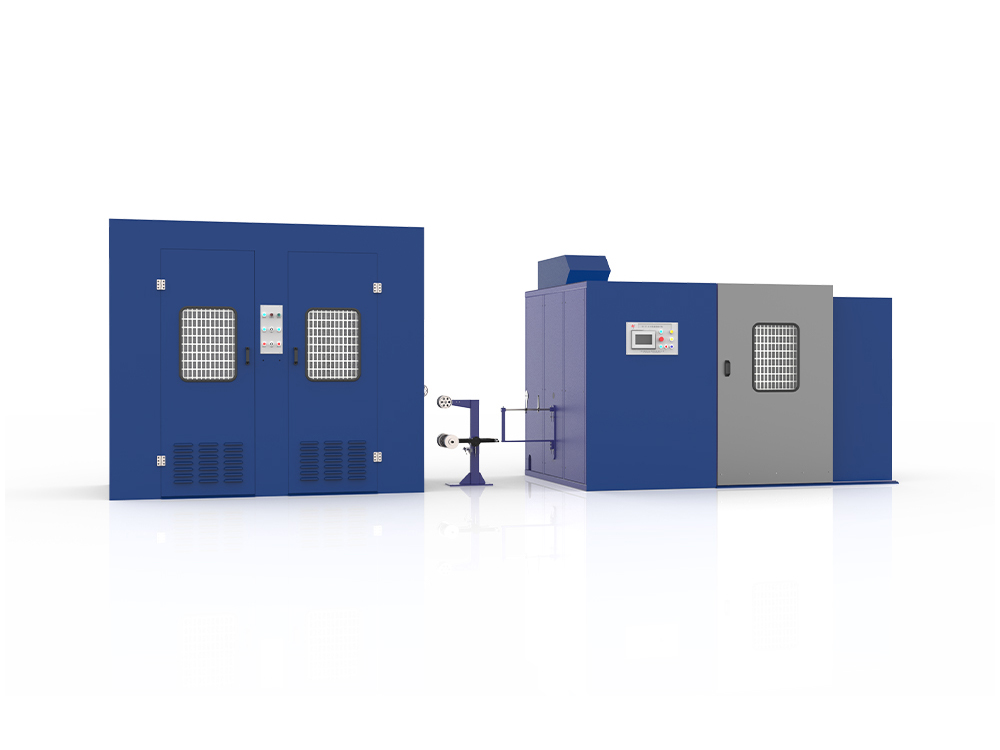
The Pair Twisting Machine with Backtwist is a key piece of equipment specially designed for LAN cable production. It is primarily used to twist two insulated core wires according to specific requireme...
See Details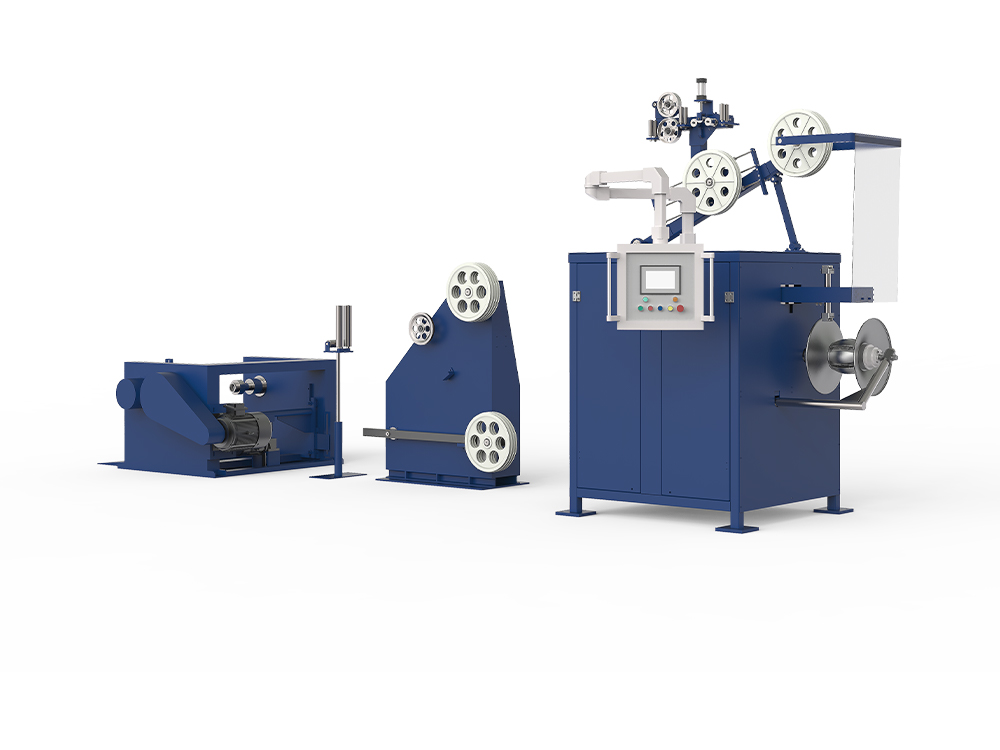
The Mesh Winding Machine is a key piece of equipment for ensuring efficient and high-quality cable coiling. Its performance directly affects the packaging quality, storage, and transportation convenie...
See DetailsWhat is the overall process flow of the Cable Core Wire Insulation Extruder Line?
1. Raw Material Preparation and Wire Feeding
Wire Pretreatment: Copper/aluminum conductors undergo degreasing and rust removal on the pay-off device to ensure surface cleanliness.
Insulation Material Supply: Polymer granules such as PVC, PE, TPEE, PP, and FEP are dehumidified in a dryer and then fed into the hopper.
Proportioning and Metering: The proportions of different materials are precisely controlled through an electronic metering system to meet the insulation performance requirements of different cables.
2. Preheating and Melting
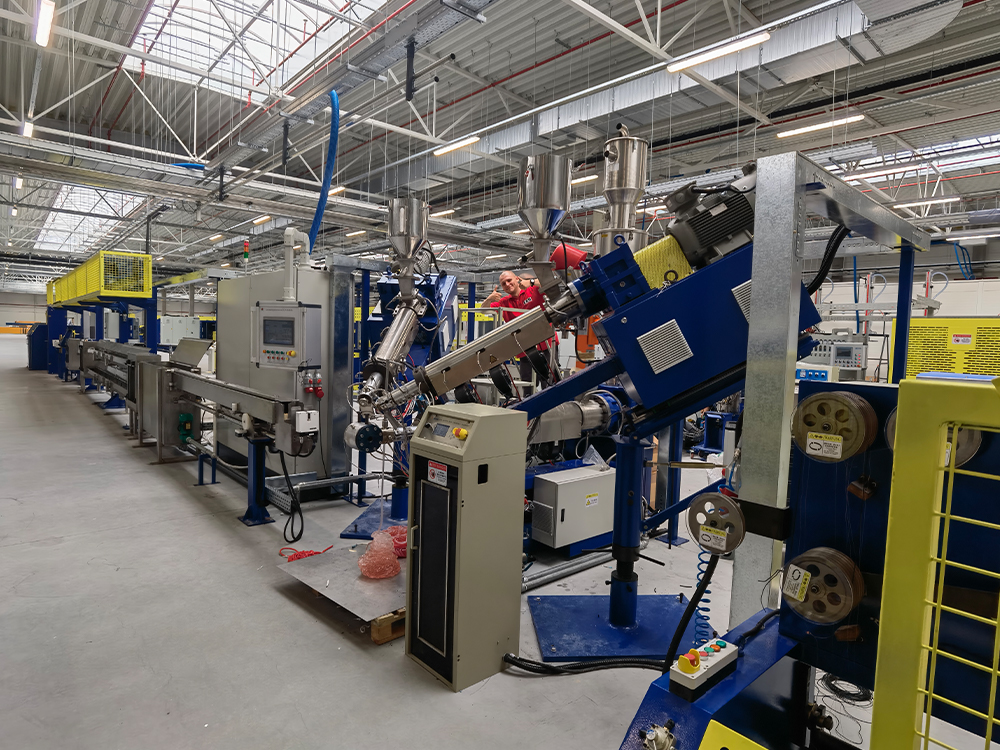
Heating Section: The extruder employs multi-stage heating (screw front section, compression section, pumping section), with temperature precisely controlled within ±1°C.
Screw Design: Selectable screw diameter and L/D ratio are optimized based on wire diameter and material viscosity to achieve high-speed wire feeding of 100-800 m/min.
Uniform Melting: Efficient mixing ensures complete polymer melting and the formation of a uniform bonding layer with the conductor.
3. Extrusion Molding
Die Structure: The die head features an internal spiral flow channel and adjustable clearance, achieving an insulation layer outer diameter of 0.8-5.0mm with a roundness >92%.
Real-time Monitoring: Diameter sensors, concentricity detectors, and spark testers monitor simultaneously to ensure product dimensions and insulation integrity.
Modular Assembly: Core components (screw, die head, stretching/winding system) utilize standardized modules, allowing for flexible combinations based on production capacity and specifications, showcasing Dachen Machinery's high customizability advantage.
4. Cooling and Winding
Water Cooling Tank: Extruded materials immediately enter a water cooling tank for rapid insulation layer curing and to prevent material backflow.
Air Cooling: Some high-temperature materials utilize spray or air cooling to reduce energy consumption and improve surface finish.
Tension Control: A tension device (haul-off/take-up) maintains a constant stretch rate to prevent wrinkling or excessive thinning of the insulation layer.
| Process Step | Key Points | Description |
| 1. Raw‑Material Preparation & Feeding | (1) Wire cleaning (de‑oil, de‑rust) | Guarantees a clean copper/aluminum conductor surface, low moisture content in polymer granules, and material ratios that meet the insulation performance requirements of different cables |
| (2) Drying of insulation granules | ||
| (3) Precise metering & proportioning | ||
| 2. Pre‑heating & Melting | (1) Multi‑zone heated screw (feed, compression, pump zones) | Multi‑zone heating ensures uniform melting of the polymer, supporting wire speeds of 100‑800 m/min |
| (2) Selectable screw diameter & L/D ratio | ||
| (3) Temperature control ±1 °C | ||
| 3. Extrusion & Forming | (1) Adjustable die to achieve 0.8‑5.0 mm outer diameter | Modular design lets users configure critical components according to capacity and specifications, ensuring dimensional accuracy and surface quality |
| (2) Real‑time monitoring of diameter and concentricity (>92 %) | ||
| (3) Modular assembly of screw, die, and tension devices | ||
| 4. Cooling & Rewinding | (1) Water‑cooling tank for rapid solidification | Cooling is coordinated with tension devices to prevent wrinkling or thinning of the insulation layer, improving concentricity and mechanical strength |
| (2) Spray/air‑cooling assistance | ||
| (3) Tension control to maintain constant draw rate |
Why is temperature control important during the Cable Core Wire Insulation Extruder Line extrusion process?
1. Material Melting and Flowability
Different insulating materials have significantly different melting points (PVC ≈ 160-180°C). Temperature deviations can lead to abnormal melt viscosity, affecting extrusion uniformity.
2. Product Dimensions and Concentricity
Temperature fluctuations directly affect the polymer's shrinkage rate, leading to outer diameter fluctuations and decreased concentricity, impacting the cable's mechanical strength and electrical performance.
3. Energy Consumption and Equipment Lifespan
Precise temperature control prevents overheating, which can accelerate screw and die wear, reducing energy consumption and extending equipment lifespan.
4. Automation and Quality Stability
Utilizing PLC/PID closed-loop temperature control enables multi-zone synchronous adjustment, ensuring process stability throughout the entire production line.
| Importance Aspect | Specific Impact |
| Material Melting & Flowability | Different insulation polymers (e.g., PVC ≈ 160‑180 °C) are temperature‑sensitive; deviations cause viscosity changes and uneven extrusion |
| Product Dimensions & Concentricity | Temperature fluctuations alter polymer shrinkage, leading to outer‑diameter variation and reduced concentricity, which affect mechanical and electrical performance |
| Energy Consumption & Equipment Longevity | Precise control avoids overheating, reducing wear on screws and dies, extending equipment life and saving energy |
| Automation & Quality Consistency | PLC/PID closed‑loop control enables synchronized multi‑zone temperature regulation, ensuring stable line operation and consistent product quality |
What are the cooling methods for the Cable Core Wire Insulation Extruder Line?
1. Water Cooling
The material immediately enters a water bath after extrusion, rapidly removing heat and allowing the insulation layer to solidify within seconds. This is suitable for high heat capacity materials such as PVC and PE.
2. Spray Cooling
This method achieves rapid, localized cooling through fine mist spraying, commonly used for thin-walled or high-temperature materials such as FEP and TPEE to prevent surface blistering.
3. Air Cooling
This method uses fans or blowers for cooling in the production of materials at low speeds or low temperatures. It is energy-efficient and the cooling rate is easily adjustable.
4. Hybrid Cooling
This method combines water cooling and air cooling to achieve rapid initial cooling followed by uniform heat dissipation, balancing curing speed and surface quality.
| Cooling Method | Working Principle | Suitable Materials / Advantages |
| Water‑Cooling Tank | Extruded product enters a water bath, quickly removing heat and solidifying the insulation layer within seconds | Ideal for high‑heat‑capacity polymers such as PVC and PE; fast cooling ensures uniform wall thickness |
| Spray / Atomization Cooling | Fine mist is sprayed onto the extrudate for localized rapid cooling, preventing surface bubbling | Suited for thin‑walled or high‑temperature polymers like FEP and TPEE; improves surface finish |
| Air‑Cooling / Forced Air | Fans or blowers circulate air over the extrudate to lower temperature | Low energy consumption; appropriate for low‑speed or low‑temperature material runs |
| Hybrid Cooling (Water + Air) | Initial rapid water cooling followed by air cooling for even heat dissipation | Combines fast solidification with gentle surface cooling, enhancing overall process flexibility |
Frequently Asked Questions (FAQ)
Q1:What functions can this equipment be customized with?
A:Customization of machine size, screw configuration, temperature control mode, automatic wire stripping, online detection, and other non-standard functions is available to meet customer needs, providing a "one-stop" solution.
Q2:Which industries or products is this equipment suitable for?
A:Suitable for the production of various insulated cables, including LAN cables, industrial power cables, optical fiber preforms, and building wires.
Q3:What is the maximum capacity of the Cable Core Wire Insulation Extruder Line?
A:This extrusion line can achieve a maximum capacity of 150kg/h (specific capacity can be customized based on the die, screw, and drive power), meeting the production needs of various specifications such as LAN and industrial cables.
Q4:Can it be customized for special cables (such as fire-resistant and flame-retardant cables)?
A:Yes. Dachen Machinery has a complete R&D system and a team of over 20% senior engineers, enabling us to provide non-standard customized solutions based on material characteristics, cross-sectional structure, and customer process requirements.


Copyright © Zhangjiagang Dachen Machinery Manufacturing Co., Ltd. All rights reserved. Custom Cable Core Wire Insulation Extruder Line Manufacturers
