русский
 中文简体
中文简体 Español
 Deutsch
 عربى
عربىContent
- 1 Quick Answer: The Core Difference Between Single Mode and Multimode Fiber
- 2 Core Diameter and Light Path Behavior
- 3 Transmission Distance and Bandwidth by Fiber Grade
- 4 Equipment Cost and Where Each Fiber Type Is Used
- 5 How Jacket Construction Differs Between the Two Fiber Types
- 6 Matching Extrusion Equipment to Fiber Cable Requirements
- 7 Choosing the Right Fiber Type for Your Project
- 8 Equipment Behind the Cable: Where Jacket Extrusion Fits In
Quick Answer: The Core Difference Between Single Mode and Multimode Fiber
The main difference comes down to core size and how light travels through it. Single mode fiber uses a core roughly 9 microns wide, sending a single, tightly focused laser beam straight down the fiber, which supports transmission distances beyond 40 kilometers with minimal signal loss. Multimode fiber uses a much wider core, either 50 or 62.5 microns, allowing multiple light paths to travel at once, which keeps equipment costs lower but limits practical distances to roughly 300 to 550 meters depending on the grade. Beyond the fiber itself, the outer jacket and buffer layers applied during manufacturing — typically on a Cable Jacket Extruder Line — also differ between the two types, since each is built for a different installation environment. The sections below cover both the optical differences and the manufacturing distinctions in detail.
Core Diameter and Light Path Behavior
The physical dimension of the glass core determines how light behaves once it enters the fiber, and this single measurement is responsible for most of the practical differences between the two fiber types.
| Property | Single Mode Fiber | Multimode Fiber |
|---|---|---|
| Core diameter | Approximately 9 microns | 50 or 62.5 microns |
| Light path | Single, direct path | Multiple reflecting paths |
| Light source | Laser diode | LED or VCSEL laser |
| Cable jacket color (common convention) | Yellow | Orange or aqua |
Because multimode fiber carries several light paths simultaneously, those paths arrive at slightly different times — an effect called modal dispersion — which is the main factor limiting its usable distance compared to single mode.
Transmission Distance and Bandwidth by Fiber Grade
Distance and bandwidth capability are the two specifications that most directly influence which fiber type fits a given project. The table below summarizes typical performance across common industry grades.
| Fiber Grade | Type | Typical Max Distance (10 Gbps) |
|---|---|---|
| OS2 | Single mode | Beyond 40 km |
| OM3 | Multimode | About 300 meters |
| OM4 | Multimode | About 400 meters |
| OM5 | Multimode | About 440 meters |
Equipment Cost and Where Each Fiber Type Is Used
Single Mode Fiber
Favored for long-haul telecom backbones, metro networks, and campus-to-campus links, where distance matters more than upfront transceiver cost. Laser-based transceivers cost more, but a single mode run needs far fewer active components over long distances.
Multimode Fiber
Common inside data centers, office buildings, and short campus backbones under 550 meters, where lower-cost LED or VCSEL transceivers make short, high-bandwidth links more economical to deploy at scale.
In practice, many networks use both: single mode for the long backbone runs between buildings, and multimode for the shorter, high-density connections within a single data center or equipment room.
How Jacket Construction Differs Between the Two Fiber Types
The optical core is only part of the finished cable. Both single mode and multimode fiber require a buffer coating and an outer protective jacket, applied during manufacturing on a Cable Jacket Extruder Line, and the construction of that jacket is chosen based on how and where the cable will be installed.
- Tight-buffered cable, common for indoor single mode and multimode patch cables, applies a 900-micron buffer directly over the fiber coating before jacketing, giving better crush resistance for indoor pathways.
- Loose-tube cable, common for outdoor single mode runs, suspends the fiber inside a gel-filled or dry water-blocking tube before the jacket is extruded, protecting against moisture and temperature swings over long outdoor spans.
- Armored variants add a corrugated steel or aluminum tape layer beneath the outer jacket for direct burial or rodent-prone environments, which changes the extrusion sequence on the production line accordingly.
Because the two fiber types are frequently paired with different buffer and jacket constructions, manufacturers producing both product lines need extrusion equipment flexible enough to switch between tight-buffered and loose-tube configurations without a full line changeover.
Matching Extrusion Equipment to Fiber Cable Requirements
For manufacturers producing both single mode and multimode fiber cable, the outer jacket stage has a direct effect on finished-cable performance, which is why the extrusion line itself needs to be selected carefully.
- A Cable Jacket Extruder Line with precise temperature control across each extrusion zone prevents uneven melt flow, which can cause wall-thickness variation and eccentricity in the finished jacket.
- Line speed and haul-off tension need to be closely matched to the fiber's buffer construction, since excess tension on a tight-buffered fiber cable can introduce micro-bending losses that show up later as attenuation in the finished product.
- Compatibility with multiple jacket compounds — including PVC, LSZH, and PE — lets one Cable Jacket Extruder Line serve both indoor-rated and outdoor-rated fiber cable products without dedicating a separate line to each.
- Inline diameter monitoring and cooling trough length both affect how consistently the jacket forms around the buffer tube, which matters more for outdoor single mode cable exposed to temperature extremes over its service life.
Choosing the Right Fiber Type for Your Project
| If Your Project Needs... | Recommended Fiber Type |
|---|---|
| Distance beyond 1 km | Single mode |
| Short, high-density data center links | Multimode |
| Lowest possible transceiver cost per port | Multimode |
| Future bandwidth upgrades without recabling | Single mode |
Equipment Behind the Cable: Where Jacket Extrusion Fits In
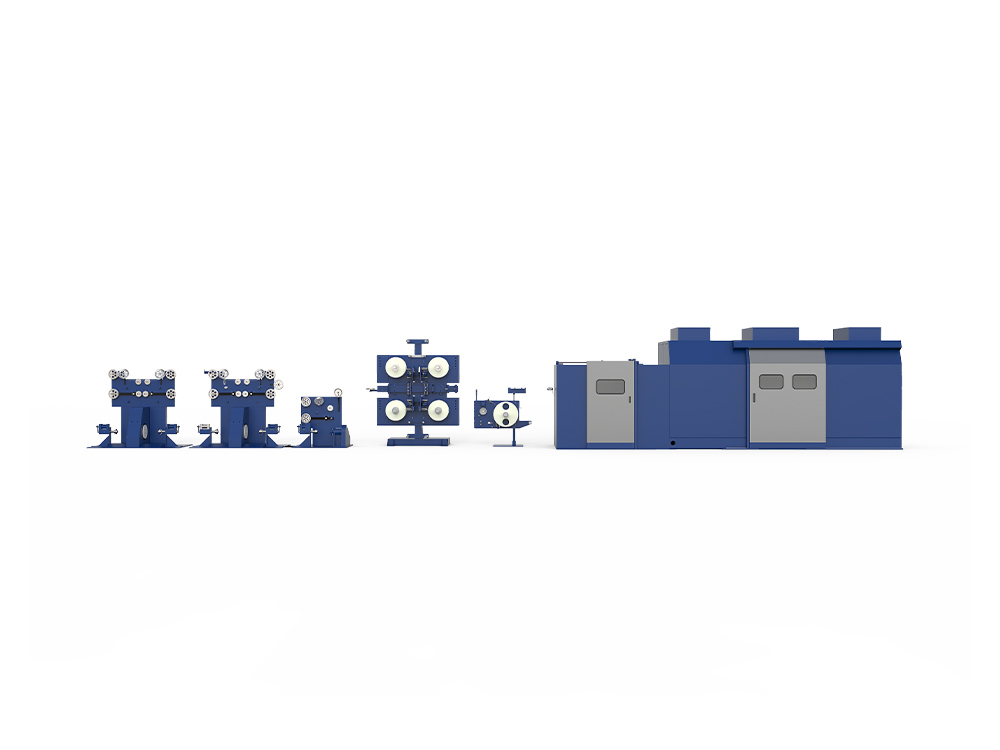
Whether a project ultimately calls for single mode or multimode fiber, the finished cable's real-world durability depends heavily on the quality of the jacketing stage. Zhangjiagang Dachen Machinery Manufacturing Co., Ltd. designs and produces cable production equipment, including Cable Jacket Extruder Line systems built for forming the insulation and outer jacket layers of communication and data cables, with configurable temperature zones and compound compatibility suited to both indoor tight-buffered constructions and outdoor loose-tube designs.
For manufacturers weighing production capacity against product flexibility, a Cable Jacket Extruder Line capable of handling multiple jacket compounds and buffer types on a single production setup reduces the need for separate dedicated lines — a factor worth evaluating alongside the optical specifications covered above.