русский
 中文简体
中文简体 Español
 Deutsch
 عربى
عربىContent
- 1 Direct Answer: The Three Core Types of Networking Cables
- 2 Twisted Pair Cables: The Backbone of LAN Networks
- 3 Coaxial Cables: Stable Transmission for Broadband and Video
- 4 Fiber Optic Cables: Maximum Bandwidth Over Long Distances
- 5 Why Insulation Technology Determines Real-World Cable Performance
- 6 Selecting Cable Types and Production Equipment Together
- 7 Matching Cable Type to Network Requirements
Direct Answer: The Three Core Types of Networking Cables
There are three primary types of cables in networking: twisted pair cable, coaxial cable, and fiber optic cable. Twisted pair cable (Cat5e through Cat8) dominates local area network installations because it balances cost, installation ease, and bandwidth. Coaxial cable remains common in broadband and video distribution. Fiber optic cable is reserved for long-distance, high-bandwidth backbones where copper cannot keep up. The right choice depends on required data rate, transmission distance, and electromagnetic interference in the installation environment.
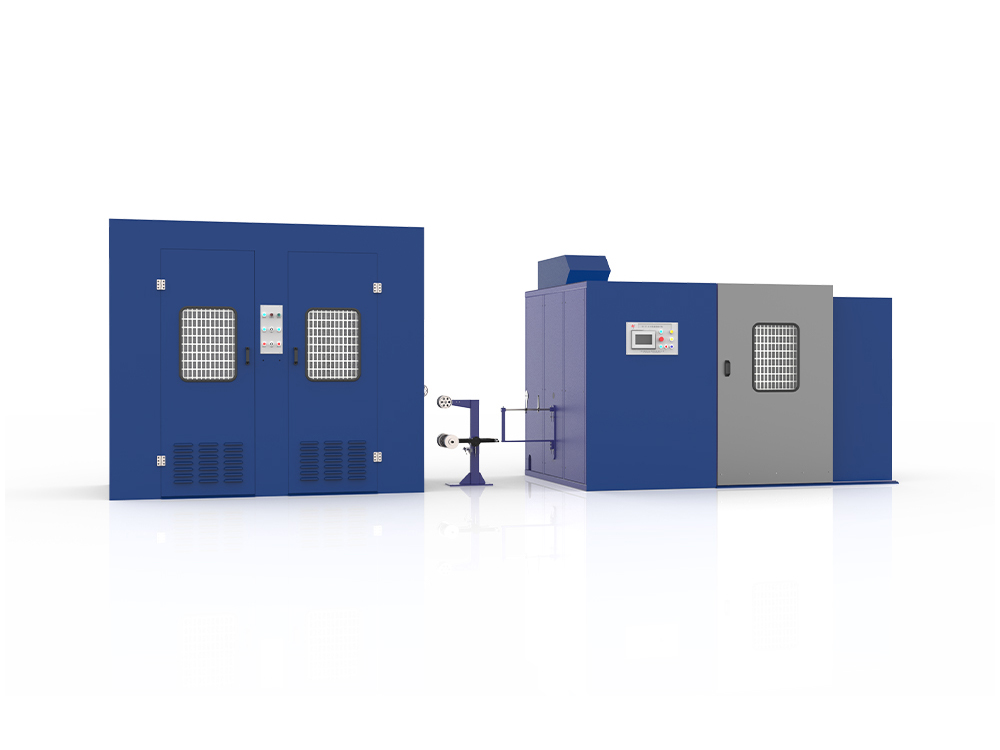
Beyond the conductor material, the insulation construction inside each cable is what ultimately determines how much signal loss and crosstalk a network experiences. This is why cable manufacturers increasingly rely on precision equipment such as a Cable Physical Foam Insulation Production Line to control the dielectric properties of the insulation layer, rather than relying on solid extrusion alone.
Twisted Pair Cables: The Backbone of LAN Networks
Twisted pair cable consists of pairs of insulated copper conductors twisted together to cancel electromagnetic interference. It is classified into unshielded twisted pair (UTP) and shielded twisted pair (STP), and further categorized by performance grade.
Common Categories and Their Applications
- Cat5e: supports up to 1 Gbps, uses solid insulation, suitable for general office networks
- Cat6: supports up to 10 Gbps at short distances, requires foamed insulation to lower capacitance
- Cat6A: supports 10 Gbps up to 100 meters, typically uses thicker or physically foamed insulation with a central cross-filler
- Cat7 and Cat8: support up to 40 Gbps, require tightly controlled impedance and physical foam insulation for stable performance at high frequencies
As category numbers increase, the insulation layer becomes the limiting factor for bandwidth. This is where physical foam insulation plays a decisive role, since it lowers the dielectric constant of the insulation without changing the conductor design.
Coaxial Cables: Stable Transmission for Broadband and Video
Coaxial cable uses a central conductor, a dielectric insulation layer, a metallic shield, and an outer jacket arranged concentrically. This structure gives coaxial cable strong resistance to interference, which is why it remains standard for cable television distribution, broadband internet drops, and certain industrial data links.
The dielectric layer between the center conductor and the shield is almost always foamed rather than solid in modern coaxial cable, because a foamed dielectric reduces signal attenuation over distance. Physical foaming, which injects nitrogen gas directly into the molten polymer, produces a more uniform cell structure than chemical foaming agents, resulting in more consistent impedance along the length of the cable.
Fiber Optic Cables: Maximum Bandwidth Over Long Distances
Fiber optic cable transmits data as light pulses through glass or plastic fibers instead of electrical signals through metal conductors. It is immune to electromagnetic interference and supports bandwidths and transmission distances far beyond what copper cabling can achieve, making it the standard choice for data center backbones, long-haul telecommunications, and campus network cores.
While fiber does not use the same insulation extrusion process as copper cable, hybrid installations often pair fiber backbone runs with copper twisted pair or coaxial cable for the final connection to end devices. Understanding how each cable type is manufactured helps network planners select products with consistent, verifiable performance specifications.
Why Insulation Technology Determines Real-World Cable Performance
Regardless of cable type, the insulation layer surrounding the conductor governs three performance factors: dielectric constant, capacitance, and signal attenuation. Lowering the dielectric constant directly improves signal propagation speed and reduces energy loss, which is why manufacturers producing Cat6, Cat6A, Cat7, Cat8, and premium coaxial cable increasingly use physical foaming rather than solid extrusion or chemical foaming.
Physical Foaming vs. Chemical Foaming vs. Solid Extrusion
| Insulation Method | Dielectric Constant | Typical Use |
|---|---|---|
| Solid extrusion | Highest | Cat5e, low-cost cabling |
| Chemical foaming | Moderate | Standard Cat6 cabling |
| Physical foaming | Lowest, most uniform | Cat6A, Cat7, Cat8, high-end coaxial |
On a properly configured Cable Physical Foam Insulation Production Line, nitrogen is injected under high pressure into the insulation material as it is extruded, producing a foaming degree that can reach as high as 65% while maintaining an insulation outer diameter tolerance suitable for fine-wire specifications. Line speeds on this type of equipment typically range from 800 to 1,200 meters per minute, with temperature control held to within ±1°C to keep the foam structure and dielectric constant consistent along the entire cable length.
Selecting Cable Types and Production Equipment Together
For network installers, cable selection is primarily a matter of matching category rating and cable type to bandwidth and distance requirements. For cable manufacturers, the decision extends further back into the production process, since the equipment used to form the insulation layer directly determines whether a finished cable can meet Cat6A, Cat7, or Cat8 certification.
Key Process Stages on a Foam Insulation Line
- Precise temperature control of the insulating compound, such as polyethylene or PVC, to ensure uniform foaming
- High-pressure nitrogen injection to form uniform micropores within the material
- Simultaneous forming of the foamed insulation and conductor through a high-precision extruder
- Real-time monitoring of line speed and foaming degree to maintain dimensional and electrical consistency
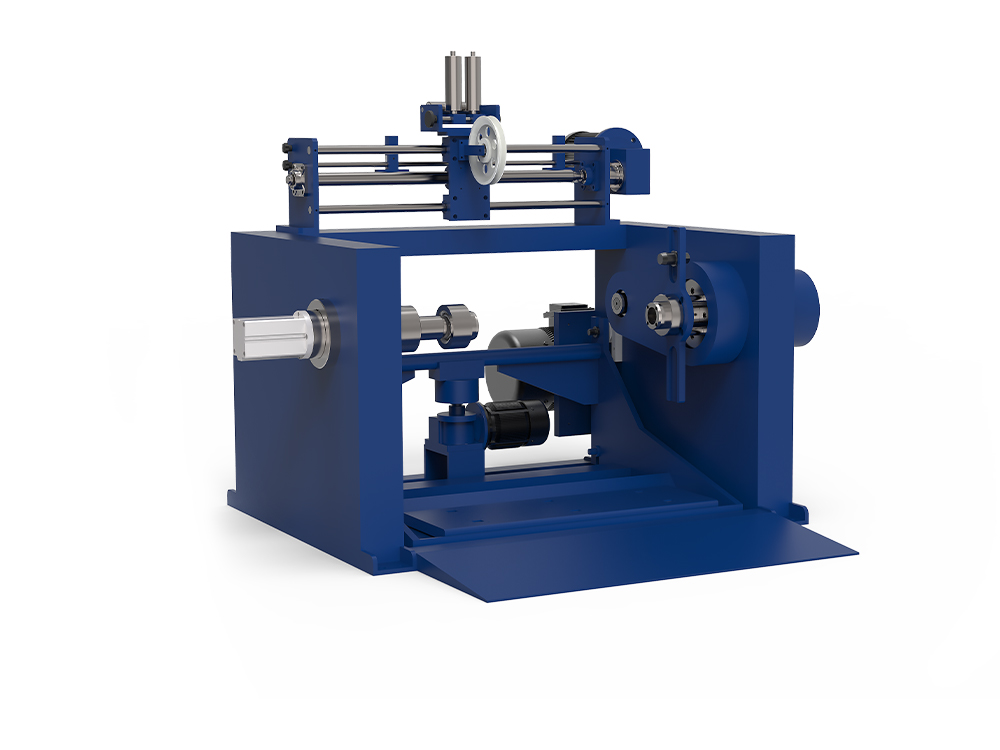
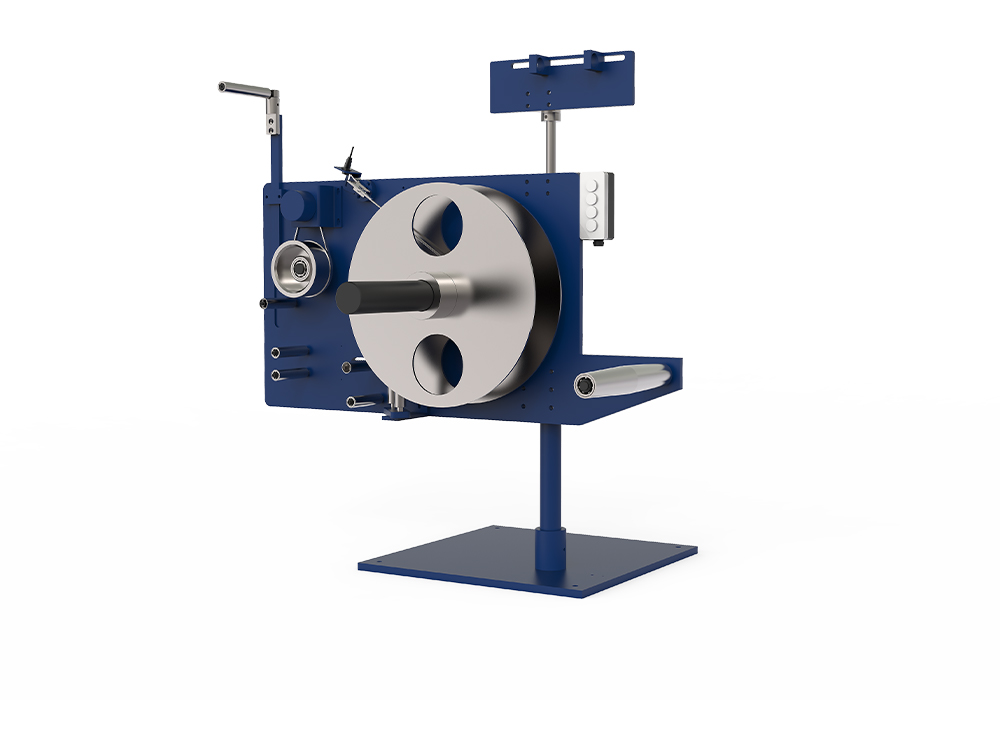
Zhangjiagang Dachen Machinery Manufacturing Co., Ltd., established in 1997, designs and manufactures this category of LAN cable production equipment, including physical foam insulation lines, pair twisting machines with backtwist, mesh winding machines, and rewinding machines. The company operates a 10,000 square meter production facility and holds ISO 9001:2008 certification, supporting manufacturers producing IEEE 1394, Cat7, and Cat8 rated cable cores.
Matching Cable Type to Network Requirements
| Cable Type | Typical Bandwidth | Best Suited For |
|---|---|---|
| Twisted Pair (Cat5e/Cat6) | Up to 10 Gbps | Office and home networks |
| Twisted Pair (Cat6A/Cat7/Cat8) | 10 to 40 Gbps | Data centers, high-density networks |
| Coaxial | Varies by application | Broadband, CATV distribution |
| Fiber Optic | Very high, long distance | Backbones, long-haul links |
In practice, most enterprise networks use a combination of these cable types: fiber for the backbone, high-category twisted pair for horizontal runs to workstations, and coaxial where legacy video or broadband infrastructure is already in place. Manufacturers supplying these cables depend on production lines capable of holding tight tolerances on insulation outer diameter and foaming degree, since even small deviations can push a finished cable below its rated performance class.