русский
 中文简体
中文简体 Español
 Deutsch
 عربى
عربىContent
- 1 What are the main processes involved in a LAN Cable Production Line?
- 2 How do the key technical parameters of a LAN Cable Production Line affect overall production capacity?
- 3 What testing equipment is needed to ensure cable performance in a LAN Cable Production Line?
- 4 What is the typical layout of a LAN Cable Production Line, and how is assembly line operation implemented?
LANCable (Local Area Network Cable) Concept and Classification
1. Functional Positioning
LANCable is a dedicated cable used for data transmission within a Local Area Network (LAN), enabling high-speed, reliable Ethernet communication over relatively short distances.
2. Technical Standards
Common LANCable standards include CAT5e, CAT6, CAT6A, CAT7, and CAT8, corresponding to transmission rates of 100Mbps, 1Gbps, 10Gbps, 40Gbps, and even 100Gbps, respectively.
3. Structural Composition
A typical structure consists of 4 or 8 pairs of twisted copper conductors, covered with insulation layers such as HDPE, PVC, and LSZH (Low Smoke Halogen-Free), and can be further enhanced with shielding layers (FTP, STP) to improve interference immunity.
4. Application Scenarios
High-quality LANCable is indispensable in applications with high bandwidth and latency requirements, such as data centers, enterprise parks, smart manufacturing workshops, and 5G LAN private networks.
What are the main processes involved in a LAN Cable Production Line?
| Process | Key Operation | Typical Equipment | Remarks |
| Conductor Drawing & Annealing | Pull copper rods into 0.2‑0.5 mm fine wires, then anneal to relieve internal stress | Wire‑drawing machine, annealing furnace | Ensures conductor flexibility and conductivity |
| Stranding & Shielding | Twist multiple fine wires together and add aluminum foil or braided copper shielding | Stranding machine, shielding machine | Affects signal integrity and EMI resistance |
| Insulation Extrusion | Heat‑extrude PVC, PE, or low‑smoke halogen‑free material to form the insulation layer | Extruder, cooling tank | Insulation thickness & uniformity determine voltage rating |
| Cabling / Co‑extrusion | Combine stranded conductors with insulation via a second extrusion or braiding step to create the complete cable structure | Braiding machine, co‑extruder | Common “semi‑suspend” or “three‑layer co‑extrusion” processes |
| Sheath Extrusion & Shaping | Extrude outer jacket using PVC, FEP, etc., then control tension and diameter | Sheath extruder, tension‑control device | Jacket material decides mechanical strength & weather resistance |
| Fixed‑Length Cutting, Reeling & Marking | Cut cables to standard lengths (1 m, 5 m, 10 m), reel, apply labels and pack | Cutting machine, winding machine, ink‑jet coder | Facilitates logistics and rapid on‑site deployment |
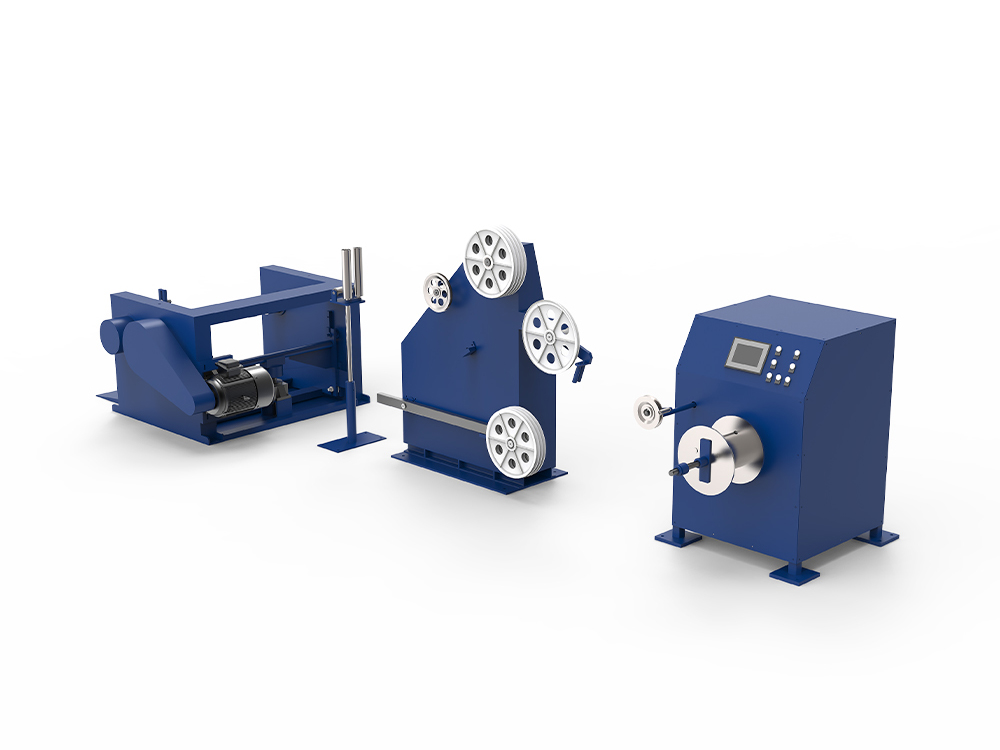
LANCable Production Line Core Processes:
1. Conductor Drawing and Stranding
Drawing (Pay-off): Drawing copper rods into fine wires with a diameter of 0.5mm–3mm, ensuring the conductor's resistance and mechanical strength meet standards.
Stranding: Twisting multiple fine wires at a preset twist rate to form single or multiple conductor cores, improving flexibility and tensile strength.
2. Insulation Extrusion (50+35 Extruder)
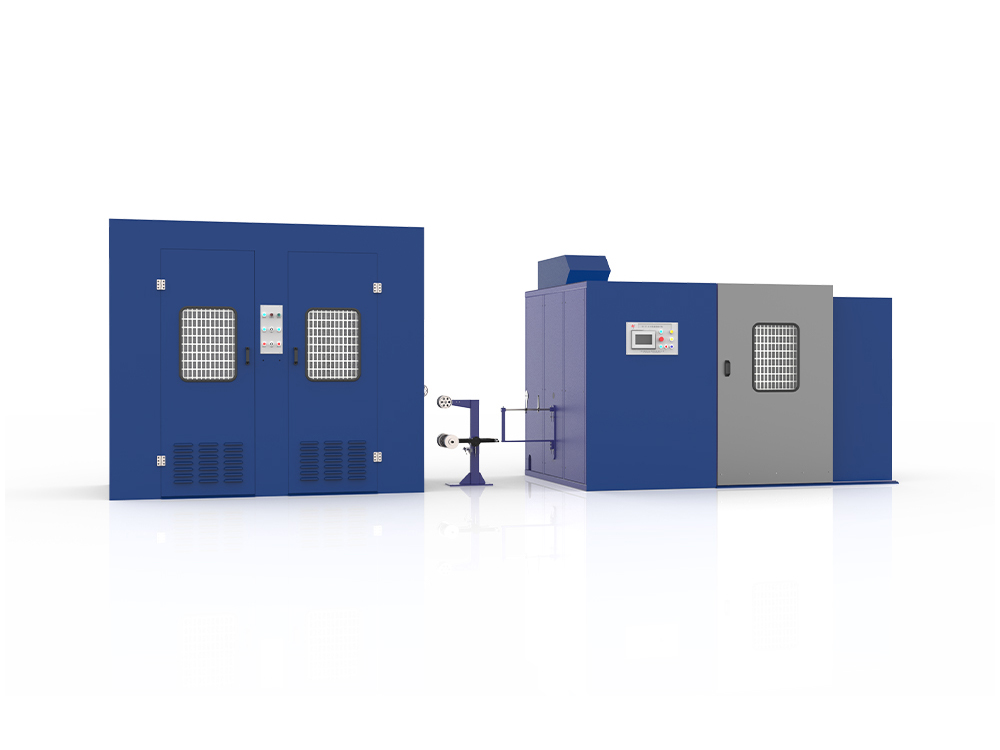
Using HDPE/PE/PVC raw materials, insulation layer extrusion and color injection are performed in a 50mm main extruder and a 35mm auxiliary extruder to form a uniform insulating sheath.
3. Pair-Twist and Back-Twist
The 500 Pair-Twist machine twists two pre-twisted conductors together to form a twisted pair; subsequently, the 500 Back-Twist machine back-twists each pair to ensure a compact structure and high signal integrity.
4. Tandem-Extruder
Multiple pairs of twisted wires are fed into the tandem-extruder, where the outer sheath is extruded and the entire assembly is wound up in the same extruder, achieving efficient one-step production.
5. Sheathing
Adding a metal sheath (armor), shielding layer (aluminum foil/braided mesh), or halogen-free flame-retardant outer sheath as needed to improve electromagnetic compatibility and safety.
6. Fixed-length cutting and packaging
The continuously produced cables are cut into fixed lengths (e.g., 1m, 5m) using a high-speed cutting machine, and then automatically packaged (cardboard boxes, plastic bags) and labeled to complete the preparation for shipment.
How do the key technical parameters of a LAN Cable Production Line affect overall production capacity?
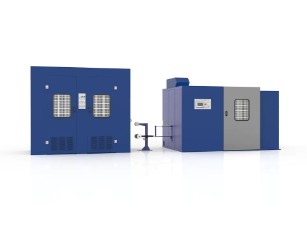
Key Technical Parameters and Their Impact on Overall Capacity
1. Line Speed
Line speed is the core indicator determining output per unit time. Modern LAN Cable Production Lines have increased their design speed from the traditional 600-800 m/min to 1200 m/min or even 2500 m/min. With the same equipment configuration, every 100 m/min increase in line speed can increase annual capacity by approximately 8%-10%. However, excessively high line speeds place higher demands on the stability of extrusion and stranding processes, requiring more precise tension control and temperature regulation systems; otherwise, quality problems such as wire diameter deviation and uneven insulation layers may occur.
2. Equipment Power and Energy Consumption
The total power of the entire production line is approximately 60 kW. Power distribution directly affects the processing efficiency and energy costs of each process. An extruder with sufficient power can maintain melt uniformity at high line speeds, reducing material waste caused by temperature fluctuations; while insufficient power will lead to increased melt viscosity, poor extrusion, and thus limit capacity increases.
3. Automation Level of Key Processes Achieving full-process automation control from conductor drawing, insulation extrusion, stranding, sheath extrusion to fixed-length packaging is key to increasing production capacity. Higher automation levels reduce manual intervention time, allowing equipment utilization rates to exceed 90%. Simultaneously, automation enables real-time quality monitoring, reducing rework rates and further enhancing effective production capacity.
4. Production Capacity and Annual Output Target Taking Zhangjiagang Dachen Machinery Manufacturing Co., Ltd.'s nominal capacity as an example, an annual output of 100,000 boxes (approximately 1.2 km/box) can be completed in approximately 2500 hours of operation per year at a line speed of 1200 m/min. By balancing the line and adding workstations, increasing the single-unit capacity to 1350 m/h, the annual output target of 3000 km/h can be achieved. Therefore, the comprehensive optimization of technical parameters (line speed, power, automation, and workstation configuration) determines the upper limit of overall production capacity.
What testing equipment is needed to ensure cable performance in a LAN Cable Production Line?
| Test Item | Typical Instrument | Function Highlights |
| Voltage Withstand & Insulation Resistance | High‑voltage withstand tester, insulation resistance meter | Checks cable breakdown at 2‑3× rated voltage; complies with IEC 60502 standards |
| Conductor / Outer Diameter Measurement | On‑line laser micrometer, optical microscope | Real‑time monitoring of conductor and jacket dimensions; prevents out‑of‑tolerance signal loss |
| Shield Continuity / Grounding | Shield continuity tester, grounding resistance meter | Verifies integrity of shielding and that grounding resistance meets Cat6A‑Cat8 specifications |
| Signal Integrity (Insertion Loss, Return Loss) | Network analyzer, Time‑Domain Reflectometer (TDR) | Evaluates insertion loss and return loss for high‑speed transmission (≥10 Gbps) |
| Automated Inline Test System | Integrated test platform (combining withstand, dimensional, optical tests) | Enables “test‑as‑you‑produce”; achieves ≥99.8 % first‑pass yield |
| Appearance & Marking Inspection | Machine‑vision inspection system, coder verification device | Automatically detects packaging labels, colors, and surface defects, reducing human error |
Essential Testing Equipment and Cable Performance Assurance
1. Insulation Resistance Tester
Insulation resistance is the primary indicator of cable safety. Commonly used instruments such as the HC2672 and Keithley 6517B can quickly measure the insulation resistance between each conductor and the shielding layer and ground under high voltage, with a testing range from a few MΩ to thousands of MΩ. On the production line, insulation resistance testers are usually used in conjunction with automatic loading and unloading devices to achieve online real-time monitoring, ensuring that each batch of products complies with national standards such as GB50150-2016.
2. Cable Continuity & Short Circuit Tester
4-in-1 or 5-in-1 LAN Cable Testers (such as Lucktek LK-468s and Amprobe LAN-1) can perform continuity, open circuit, short circuit, twisted pair, and shielding layer tests in one operation. These instruments are equipped with LED indicators and audible and visual alarms, suitable for rapid sampling inspection on high-speed production lines. They can determine the correctness of each wire pair's wiring within seconds, significantly reducing rework costs caused by wiring errors.
3. High-Frequency Network Analyzer: For high-speed data cables such as Cat6, Cat7, and Cat8, it is necessary to verify their transmission characteristics (such as insertion loss, return loss, near-end crosstalk, and far-end crosstalk). Network analyzers from brands such as Fluke and World of Test can perform full-band scanning above 250MHz to ensure that the cable meets the performance requirements of the TIA/EIA-568-B standard.
4. Mechanical Performance Testing Equipment: This includes tensile testing machines, bending life testing machines, and environmental testing chambers for fire resistance and oil resistance. These are used to verify the abrasion resistance, temperature resistance, and flame retardancy rating of the sheath material, ensuring that the cable maintains its mechanical integrity under harsh operating conditions.
5. Integrated Test System: Zhangjiagang Dachen Machinery Manufacturing Co., Ltd. has equipped its fully automated production line with PLC-controlled testing stations, achieving a closed loop of "testing-recording-feedback". Test data is uploaded to the MES system in real time, allowing quality engineers to perform trend analysis and early warning, forming a fully traceable system from raw material entry to finished product exit.
What is the typical layout of a LAN Cable Production Line, and how is assembly line operation implemented?
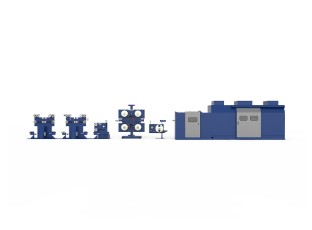
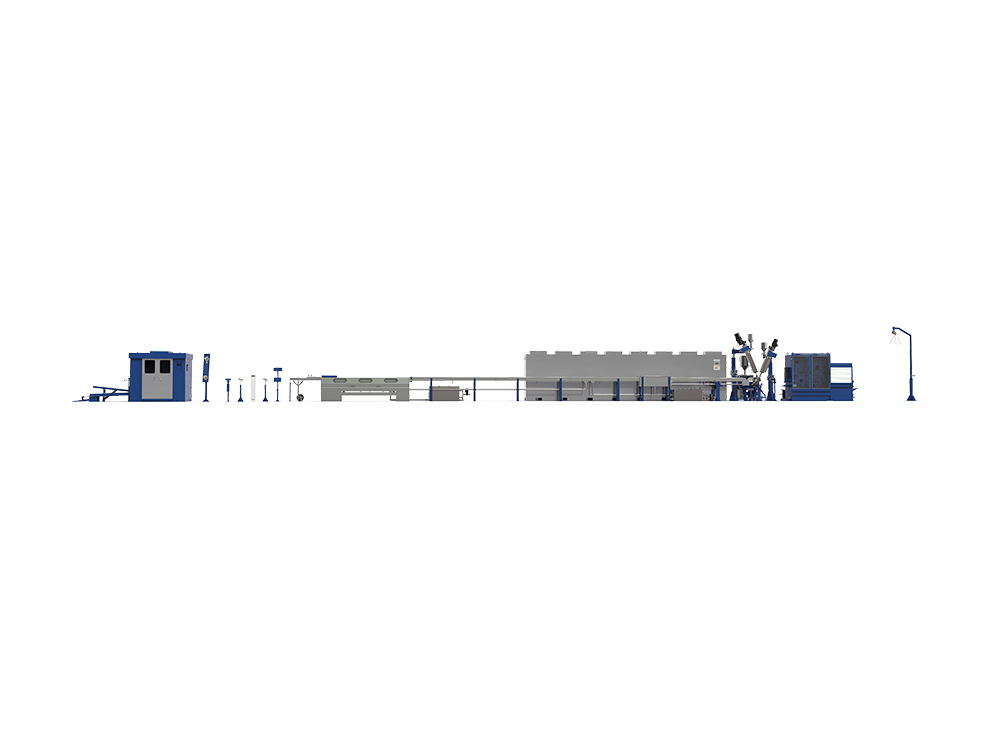
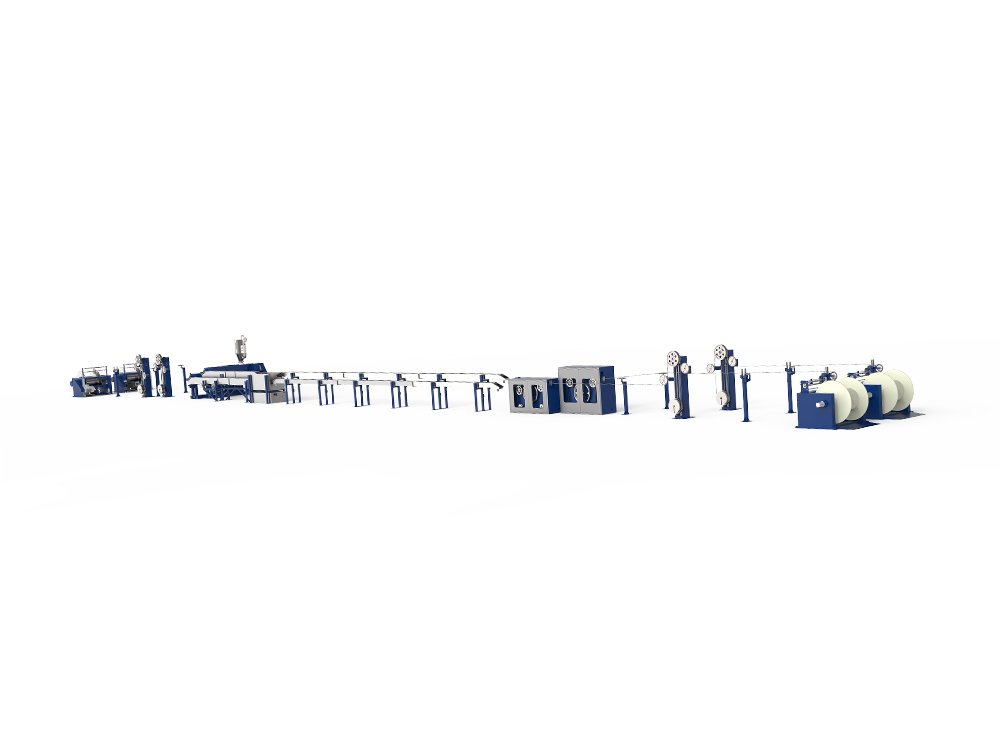
1. Linear Layout: The most common layout arranges each process in a straight line according to the sequence of "wire drawing → insulation → stranding → sheathing → packaging," forming a continuous, branchless production chain. This layout maximizes the unidirectional flow of materials, avoids backflow and cross-interference, and improves overall equipment utilization.
2. Modular Workstation Design: Each key process is divided into an independent modular workstation, which contains equipment, control cabinets, detection devices, and safety protection. Modular design facilitates future expansion or modification, such as adding a high-speed color sorting machine after sheath extrusion or an automatic counting machine before packaging. Modules are synchronously transported via conveyor belts or rollers, ensuring consistent cycle times across all workstations.
3. Line Balancing and Cycle Time Synchronization: By statistically analyzing the processing time of each workstation, the minimum common cycle time is calculated, and the corresponding number of devices or buffer units are configured based on this cycle time. Studies show that by adopting the line balancing method, production line idle time can be reduced from 109 seconds to less than 30 seconds, increasing overall capacity by approximately 15%. In Dachen Machinery's production line, the inner and outer sheath sections each have dual machines operating in parallel to meet the cycle time requirements under high line speeds.
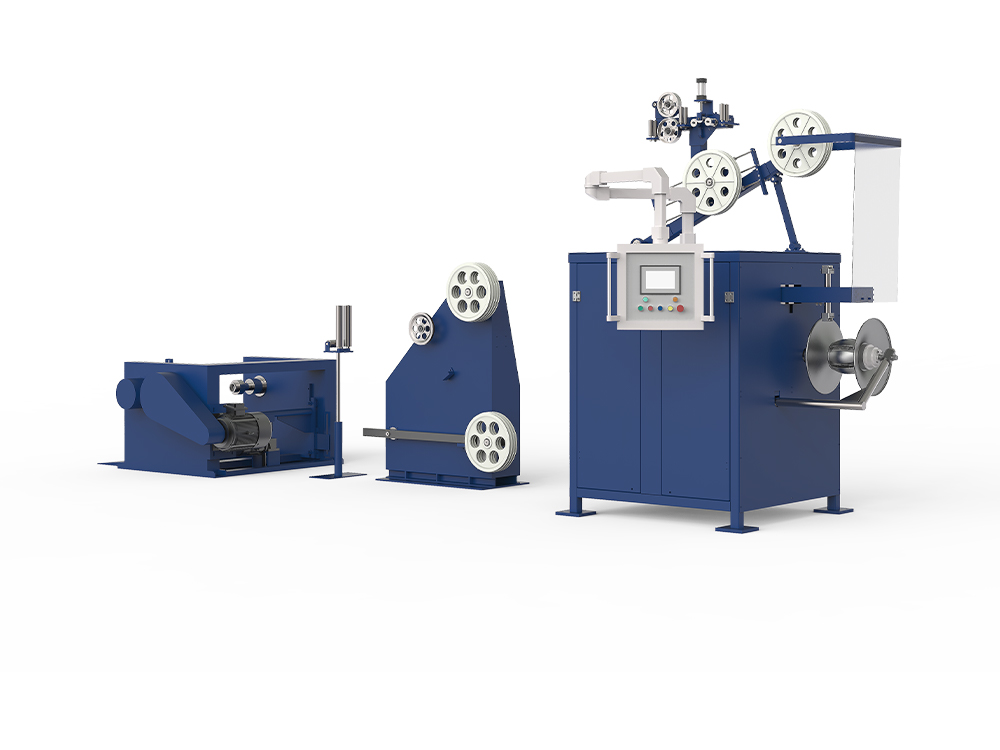
4. Automated Logistics and Material Handling System The entire production line is equipped with an automated feeding system (including copper wire coils, insulation boxes, and masterbatch containers) and an unloading conveying system (finished product coils and packaging boxes). The feeding system uses PLC + vision recognition to achieve automatic coil positioning, tension adjustment, and coil changing; the unloading system achieves rapid finished product outbound processing through automatic counting, sorting, and palletizing. Closed-loop control of the logistics system ensures seamless material flow on the production line, minimizing manual handling time.
5. Human-Machine Collaboration and Safety Protection Although highly automated, key nodes still retain manual monitoring and maintenance access. Each workstation is equipped with an emergency stop button, light curtain safety protection, and safety doors, complying with ISO 14120 safety standards. Operators can view the workstation status, detection data, and early warning information in real time via touch screen, enabling flexible production through human-machine collaboration.